
Approaches to Disaster Risk Reduction in India: Policies, Practices, and Challenges
GS-1, Unit-2, Sub Unit-1, HPAS Mains
India is among the most disaster-prone countries in the world due to its vast geographical diversity, climatic variability, and high population density. The country faces multiple hazards such as earthquakes, floods, cyclones, droughts, landslides, heatwaves, industrial disasters, and pandemics. These hazards, when combined with socio-economic vulnerabilities and environmental degradation, often result in large-scale disasters. Recognising the long-term developmental losses caused by disasters, India has progressively adopted a Disaster Risk Reduction (DRR) approach that focuses on prevention, mitigation, preparedness, and resilience rather than only post-disaster relief.
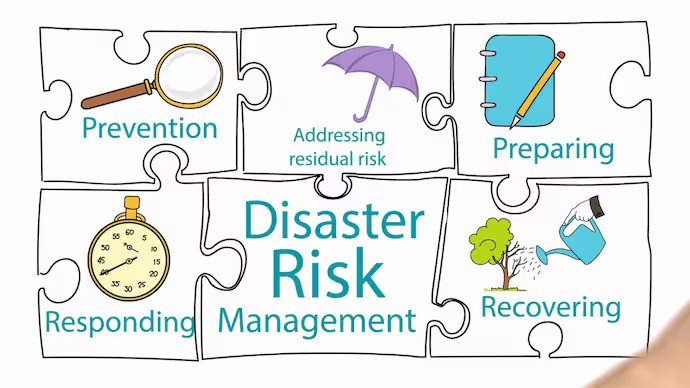
Conceptual Shift: From Relief-Centric to Risk Reduction Approach
Traditionally, disaster management in India was largely reactive in nature, emphasising emergency response, relief, and rehabilitation. However, major disasters such as:
- Odisha Super Cyclone (1999)
- Gujarat Earthquake (2001)
- Indian Ocean Tsunami (2004)
- Uttarakhand floods (2013)
exposed the limitations of a relief-oriented model and highlighted the need for long-term risk reduction strategies.
Disaster Risk Reduction is based on the understanding that disasters are not purely natural events but are shaped by:
- Exposure of people and assets
- Physical, social, and economic vulnerabilities
- Weak governance and planning mechanisms
Thus, reducing disaster risk requires addressing these underlying factors in a systematic manner.
Policy Framework for Disaster Risk Reduction in India
India has developed a comprehensive policy and institutional framework to support DRR.
Key legislative and policy instruments include:
- Disaster Management Act, 2005
- Provides a legal basis for disaster management in India
- Established a multi-tier institutional framework
- National Disaster Management Authority (NDMA)
- Apex body chaired by the Prime Minister
- Responsible for policy formulation and guidelines
- State Disaster Management Authorities (SDMAs) and
District Disaster Management Authorities (DDMAs)- Ensure decentralised implementation of DRR measures
- National Policy on Disaster Management, 2009
- Emphasises prevention, mitigation, preparedness, and capacity building
- National Disaster Management Plan (NDMP)
- Aligns India’s DRR strategy with the Sendai Framework for Disaster Risk Reduction (2015–2030)
- Focuses on:
- Risk assessment
- Early warning
- Preparedness
- “Build Back Better” during recovery
Additionally, DRR considerations are increasingly integrated into:
- National Action Plan on Climate Change (NAPCC)
- Urban missions like Smart Cities Mission and AMRUT
- Housing and infrastructure programmes such as PM Awas Yojana
Practical Approaches to Disaster Risk Reduction in India
- Institutional and Governance-Based Approaches
India has established a robust institutional mechanism for DRR across different administrative levels. A major milestone has been the creation of the National Disaster Response Force (NDRF), which has enhanced preparedness and response capacity.
Key initiatives include:
- Regular mock drills and simulations
- Training programmes for officials and first responders
- Inter-agency coordination during emergencies
- Early Warning Systems and Use of Technology
India has made significant progress in developing technology-driven early warning systems, especially for hydro-meteorological disasters.
Key agencies involved:
- India Meteorological Department (IMD)
- Central Water Commission (CWC)
- Indian Space Research Organisation (ISRO)
Technological tools used include:
- Doppler Weather Radars
- Satellite-based monitoring
- Flood forecasting models
- Mobile-based alert dissemination
Effective cyclone early warning systems along India’s eastern coast have dramatically reduced loss of life, showcasing the success of preventive DRR measures.
- Community-Based Disaster Risk Reduction (CBDRR)
Communities are the first and most affected responders during disasters. India’s DRR strategy increasingly emphasises community participation and local ownership.
Key components include:
- Village and ward-level disaster management plans
- Training of local volunteers and civil defence groups
- Participation of self-help groups, NGOs, and youth organisations
- Use of indigenous knowledge systems for risk mitigation
Community-based approaches help in:
- Faster response
- Better risk awareness
- Enhanced resilience at the grassroots level
- Structural and Non-Structural Mitigation Measures
Disaster risk reduction involves both physical infrastructure and policy-based interventions.
Structural measures include:
- Cyclone shelters and evacuation infrastructure
- Flood embankments and drainage systems
- Earthquake-resistant construction
- Landslide protection works
Non-structural measures include:
- Land-use planning and zoning regulations
- Building codes and safety standards
- Disaster insurance and risk transfer mechanisms
- Public awareness campaigns and school education
Effective enforcement of these non-structural measures remains critical for long-term risk reduction.
- Mainstreaming DRR into Development Planning
India increasingly recognises that disaster risk reduction must be integrated into development planning.
This approach involves:
- Risk assessments for infrastructure and development projects
- Disaster-resilient design in housing and transport
- Environmental protection to reduce hazard intensity
- Avoiding development in high-risk zones
Mainstreaming DRR ensures that development gains are not repeatedly lost to disasters.
Challenges in Disaster Risk Reduction in India
Despite progress, several challenges hinder effective DRR implementation.
Major challenges include:
- Rapid urbanisation and unplanned growth, leading to expansion into floodplains and coastal zones
- Capacity constraints at local levels, including shortage of trained personnel and limited resources
- Climate change impacts, increasing the frequency and intensity of extreme events
- Social and economic vulnerabilities, such as poverty, informal housing, and gender inequality
- Data gaps and coordination issues among institutions and agencies
The Way Forward
Strengthening Disaster Risk Reduction in India requires:
- Empowerment of local governments
- Strict enforcement of land-use planning and building codes
- Integration of climate change adaptation with DRR
- Investment in resilient infrastructure
- Strong community participation and awareness
Conclusion
India’s approach to Disaster Risk Reduction has evolved from a reactive relief-based model to a proactive and resilience-oriented framework. While policies and institutional mechanisms are well developed, addressing implementation gaps, social vulnerabilities, and climate-induced risks will be crucial. A holistic, inclusive, and development-integrated DRR strategy will determine India’s ability to safeguard lives, livelihoods, and long-term development in an increasingly risk-prone future.