
Right to Education: Law, Reality, and the Child Rights Challenge
GS-1, Unit-3, Sub Unit-1, HPAS Mains
Education is universally recognised as the most powerful tool for individual growth and social transformation. For children, it is not merely a means of acquiring knowledge or skills but a fundamental human right that shapes their future and safeguards their dignity. The Right to Education (RTE) embodies the idea that every child, irrespective of socio-economic background, gender, caste, religion, or ability, deserves free, quality, and equitable education. While many countries, including India, have legally guaranteed this right, the gap between law and lived reality continues to pose serious child rights challenges.
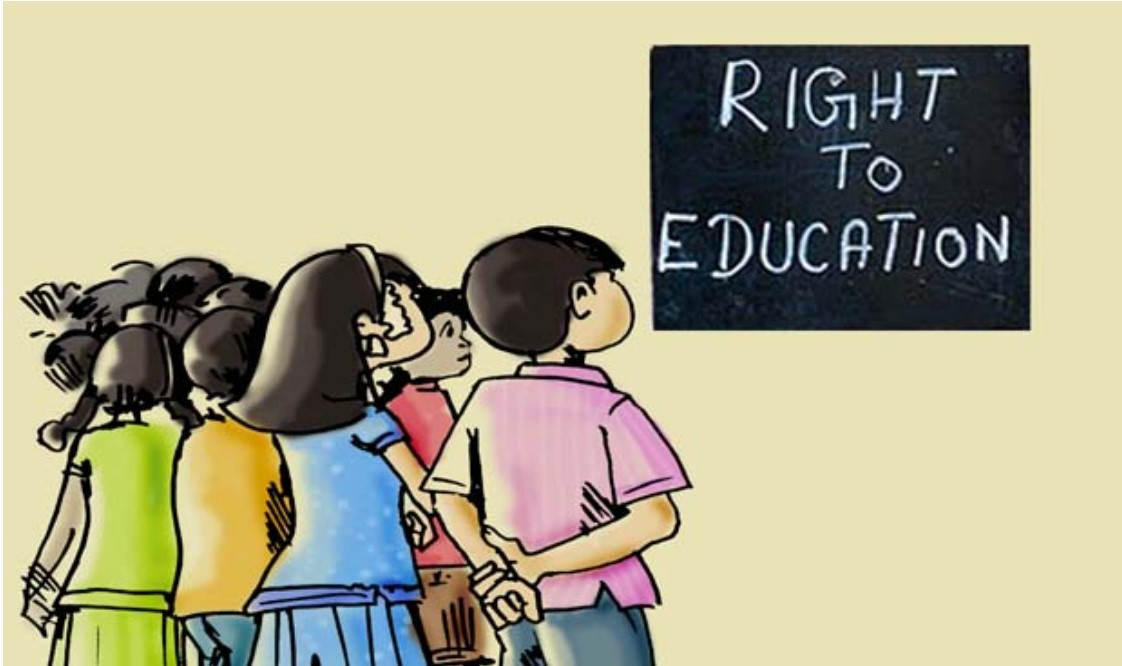
Education as a Child Right
Child rights are based on the principle that children are independent rights-holders and not passive recipients of adult benevolence. Internationally, the UN Convention on the Rights of the Child (UNCRC), 1989 affirms education as a core right under Articles 28 and 29, emphasising free and compulsory primary education, equal access, and holistic development of the child’s personality and abilities.
Education supports other child rights as well. It reduces vulnerability to child labour, early marriage, trafficking, and exploitation. It empowers children to participate meaningfully in society and equips them with awareness about health, equality, and democracy. Thus, denying education is not a standalone failure, it triggers a chain reaction of rights violations.
The Legal Framework: Promise of the Law
In India, the Right of Children to Free and Compulsory Education Act, 2009, operationalised Article 21A of the Constitution. It made education a justiciable fundamental right for children aged 6–14 years. The law mandates:
- Free education, including textbooks, uniforms, and mid-day meals
- Compulsory schooling with no detention and no corporal punishment
- Minimum standards for school infrastructure and teacher qualifications
- A 25% reservation for children from Economically Weaker Sections (EWS) in private unaided schools
On paper, the RTE Act represents a landmark child rights intervention. It shifted education from a policy goal to a legal obligation of the state, empowering parents and children to demand accountability.
Reality on the Ground: Persistent Gaps
Despite strong legal backing, the lived reality of millions of children tells a more complex story. Access to schools has improved significantly, but quality, equity, and retention remain major concerns.
First, learning outcomes are alarmingly low. Surveys consistently show that many children in elementary schools struggle with basic reading and arithmetic skills. Enrollment does not automatically translate into meaningful learning, raising questions about the effectiveness of schooling itself.
Second, socio-economic inequalities deeply affect educational access. Children from marginalised communities—Scheduled Castes, Scheduled Tribes, migrant families, urban poor, and children with disabilities—face higher dropout rates. Poverty forces many children into work, domestic responsibilities, or informal labour, directly conflicting with their right to education.
Third, infrastructure and teacher shortages persist, especially in rural and remote areas. Multi-grade classrooms, lack of toilets (particularly affecting girls), inadequate digital access, and overburdened teachers weaken the educational experience and indirectly violate child rights.
The Child Rights Challenge
The core challenge lies in translating legal guarantees into child-centred realities. The RTE framework largely focuses on access and inputs but often neglects the broader ecosystem required for children to thrive.
One major concern is the age limitation of the RTE Act. By covering only 6–14 years, it excludes early childhood education (crucial for cognitive development) and secondary education (essential for employability and empowerment). This fragmented approach undermines the holistic vision of child rights.
Another challenge is the exclusion of children outside the formal system—street children, homeless children, children affected by conflict or displacement, and those in institutional care. For them, schooling is not just an administrative issue but a matter of survival and dignity.
Additionally, the COVID-19 pandemic exposed and deepened existing inequalities. Prolonged school closures and digital learning widened the gap between children with access to technology and those without. For many disadvantaged children, education was effectively suspended, raising serious child rights concerns that are still unfolding.
Beyond Law: What Needs to Change
To address the child rights challenge, the Right to Education must evolve from a compliance-driven framework to a child-centric, quality-oriented approach.
- Focus on learning, not just enrollment
Education policies must prioritise foundational literacy, numeracy, and critical thinking. Regular assessment, teacher training, and child-friendly pedagogy are essential. - Inclusive education
Schools must adapt to the needs of children with disabilities, migrants, linguistic minorities, and first-generation learners. Inclusion is a core child rights principle, not an optional add-on. - Strengthening early and secondary education
Extending the spirit of RTE to pre-primary and secondary levels is crucial for ensuring continuity and preventing dropouts. - Community and parental involvement
Local communities, parents, and civil society organisations play a vital role in monitoring schools and protecting children’s rights. - Listening to children
A rights-based approach requires acknowledging children’s voices. Their experiences, aspirations, and challenges should inform education policy and practice.
Conclusion
The Right to Education is more than a legal provision—it is a moral commitment to every child’s future. While laws like the RTE Act mark significant progress, the persistent gap between promise and practice highlights a deeper child rights challenge. True fulfilment of the right to education demands sustained political will, social investment, and a shift from viewing children as beneficiaries to recognising them as rights-holders.
Only when education becomes meaningful, inclusive, and empowering can society claim to have honoured both the letter and the spirit of child rights.
Note: Topic important for UPSC, HPAS, State PCS