
Commercialisation of Agriculture in British India
GS-1, Unit-1, Sub Unit-1, HPAS Mains
The commercialisation of agriculture in British India was a significant transformation that reshaped rural economies, social structures, and the agrarian landscape. Before British rule, Indian agriculture was largely subsistence-based, focused on growing crops for local consumption. Farmers cultivated food grains like rice, wheat, and millets to meet the needs of their families and local markets. With the advent of British colonial policies, however, agriculture shifted from a subsistence model to a profit-oriented or market-driven system, profoundly affecting Indian society and economy.
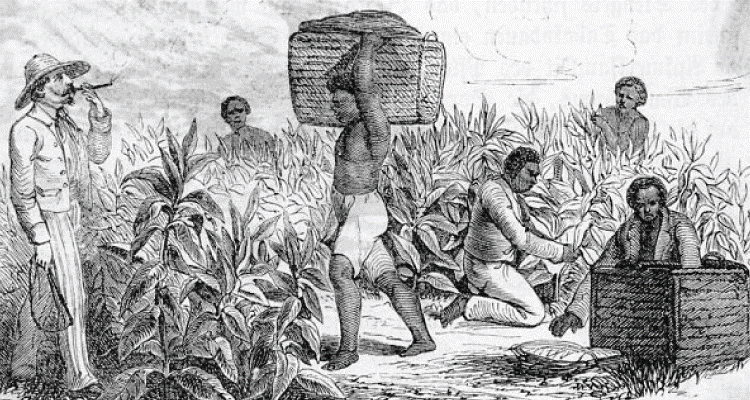
Features of Commercialised Agriculture
- Focus on cash crops like cotton, indigo, jute, tea, sugarcane, and opium.
- Integration of Indian agriculture into global markets.
- Dependence on moneylenders and credit systems for cultivation.
- Use of modern techniques (irrigation, fertilizers, improved seeds).
- Shift from food crops to marketable crops, often leading to food scarcity.
- Regional disparities in prosperity depending on crop and soil suitability.
- Farmers became vulnerable to price fluctuations and global demand.
Reasons for Commercialisation
- British Economic Policies
- India was treated as a source of raw materials for British industries.
- Cash crops like cotton, indigo, tea, jute, sugarcane, and opium were promoted for export.
- Land Revenue Systems
- Systems like Permanent Settlement, Ryotwari, and Mahalwari demanded cash payments.
- Farmers had to grow marketable crops to pay taxes.
- Expansion of Markets
- Development of railways and roads linked villages to domestic and global markets, enabling profit-oriented farming.
- Introduction of Modern Agricultural Techniques
- New seeds, irrigation methods, fertilizers, and tools improved yields, often for cash crops.
- Global Demand for Cash Crops
- Industrialization in Europe created high demand for raw materials like cotton, jute, and indigo, incentivizing market-oriented cultivation.
Impact on Rural Economy
- Positive Impacts:
- Exposure to modern agricultural techniques, including improved seeds, irrigation, and fertilizers.
- Increased income for farmers in regions cultivating profitable cash crops (e.g., Bengal for indigo, Assam for tea, Bombay Presidency for cotton).
- Integration of rural areas into domestic and international markets.
- Negative Impacts:
- Food scarcity due to reduced cultivation of subsistence crops.
- Increased vulnerability to famines, e.g., 1876-78 famine in cotton-growing regions.
- Indebtedness of peasants because of dependence on moneylenders for cash crop cultivation.
- Regional disparities, with some areas prospering while others remained impoverished.
- Disruption of traditional village economies and cottage industries.
Socio-Political Consequences
- Concentration of wealth in the hands of landlords and intermediaries.
- Loss of traditional land rights for peasants.
- Rise of peasant unrest, e.g., Indigo Revolt (1859-60) in Bengal.
- Dependence on global market prices created economic vulnerability.
- Indebtedness, distress land sales, and migration became common among peasants.
Key Examples
- Indigo in Bengal: Farmers forced to cultivate for British planters.
- Cotton in Bombay Presidency: Integrated into global textile trade.
- Tea in Assam: Led to establishment of plantations and export economy.
- Sugarcane in Punjab and UP: Cash crop focus over subsistence grains.
Conclusion
The commercialisation of agriculture in British India was a double-edged sword. While it integrated Indian agriculture into the global economy and introduced certain modern practices, it primarily served the interests of the colonial rulers rather than the farmers. The focus on cash crops, combined with exploitative revenue policies, disrupted traditional economies, caused famines, and deepened rural poverty.