
India’s Demographic Profile: Opportunities, Challenges, and the Road Ahead
The demographic profile of India is one of the most dynamic and closely watched in the world. With a population exceeding 1.4 billion, India has recently surpassed China to become the most populous country. However, beyond sheer numbers, what makes India’s demography particularly significant is its age structure, regional diversity, and evolving population trends, all of which have far-reaching implications for economic growth, social development, and public policy.
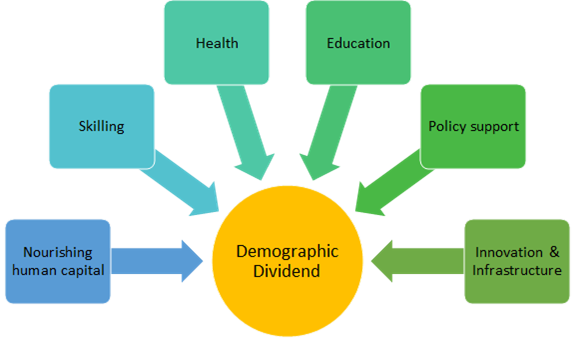
Understanding India’s Demographic Profile
India is currently in a transitional demographic phase, moving from high birth and death rates to lower fertility and mortality levels. A key feature of this transition is the youth bulge—nearly 65% of the population is below the age of 35, and about 50% is under 25. This creates a unique window of opportunity often referred to as the demographic dividend, where a larger working-age population (15–64 years) can contribute to higher economic productivity.
At the same time, India’s demographic profile is marked by regional variations. Southern states like Kerala and Tamil Nadu have already achieved near replacement-level fertility, while states like Bihar and Uttar Pradesh continue to have higher fertility rates. Urbanisation is another defining trend, with cities expanding rapidly due to migration and economic opportunities.
Opportunities: The Promise of a Demographic Dividend
India’s young population presents immense opportunities for growth and development.
- Economic Growth Potential
A large working-age population can boost productivity, savings, and investment. If properly employed, this workforce can accelerate GDP growth and position India as a global economic powerhouse. - Expanding Labour Force
India has the potential to become a global supplier of skilled and semi-skilled labour, especially as many developed countries face ageing populations and shrinking workforces. - Innovation and Entrepreneurship
A young population is generally more adaptable, tech-savvy, and entrepreneurial. India’s startup ecosystem, digital economy, and innovation landscape are already benefiting from this demographic advantage. - Rising Domestic Demand
A growing middle class and youthful consumers drive demand for goods and services, boosting sectors like retail, housing, education, and healthcare.
Challenges: The Other Side of the Coin
Despite its advantages, India’s demographic profile also poses serious challenges that could turn the dividend into a liability if not addressed.
- Unemployment and Underemployment
One of the biggest concerns is the inability to generate sufficient quality jobs. High unemployment, especially among educated youth, risks social unrest and wasted human potential. - Skill Deficit
A significant portion of the workforce lacks industry-relevant skills. The gap between education and employability remains a major hurdle in leveraging the demographic dividend. - Regional Disparities
Uneven demographic transition across states leads to imbalanced development. While some regions face labour shortages, others struggle with population pressure and limited resources. - Pressure on Resources and Infrastructure
Rapid population growth and urbanisation strain infrastructure, housing, water supply, and public services, particularly in urban areas. - Ageing Population (Emerging Concern)
Although India is currently young, the proportion of elderly people is gradually increasing. This will require robust social security and healthcare systems in the future.
Population Policy and Institutional Response
India has made significant efforts to manage its demographic transition through policy interventions. The National Population Policy (2000) aimed to achieve replacement-level fertility and improve health indicators. Programs focusing on maternal and child health, family planning, and reproductive healthcare have contributed to declining fertility rates.
Additionally, initiatives like Skill India, Digital India, and Startup India are designed to enhance employability and harness the potential of the youth. However, the effectiveness of these policies depends largely on implementation, coordination, and addressing regional disparities.
The Road Ahead: Strategies for Harnessing the Dividend
To fully capitalize on its demographic advantage, India must adopt a multi-pronged strategy:
- Job Creation and Economic Diversification
Promoting labour-intensive industries such as manufacturing, textiles, and services can generate large-scale employment. Strengthening MSMEs and encouraging private investment is crucial. - Education and Skill Development
Improving the quality of education and aligning it with market needs is essential. Vocational training, apprenticeships, and digital skills must be prioritised. - Health and Nutrition
A healthy workforce is a productive workforce. Investments in healthcare, nutrition, and sanitation are critical for human capital development. - Balanced Regional Development
Targeted policies are needed to address regional disparities, ensuring equitable growth and reducing migration pressures. - Urban Planning and Infrastructure
Sustainable urbanisation, smart cities, and improved infrastructure can accommodate population growth and enhance quality of life. - Gender Inclusion
Increasing female labour force participation can significantly boost economic output. Removing social and structural barriers is key.
Conclusion
India stands at a critical juncture in its demographic journey. Its large and youthful population offers a once-in-a-lifetime opportunity to achieve sustained economic growth and social transformation. However, this demographic dividend is not automatic—it must be earned through effective policies, investments in human capital, and inclusive development strategies.
If India succeeds in addressing its challenges, its demographic profile can become its greatest strength. Otherwise, the same factors could lead to economic strain and social tensions. The road ahead, therefore, lies in transforming population into productive power, ensuring that India’s demographic story becomes one of success rather than missed opportunity.
Note: Topic important for UPSC, HPAS, State PCS