
Disaster profile of the country
Understanding India’s Disaster Profile: A Comprehensive Overview
India’s unique geo‑climatic, topographic, and socio‑economic conditions make the country one of the most disaster‑vulnerable regions in the world. From the soaring peaks of the Himalayas in the north to more than 7,500 km of coastline touching the Indian Ocean, diverse landscapes and climatic zones mean that multiple hazards coexist, with varying impacts on people, livelihoods, and development.
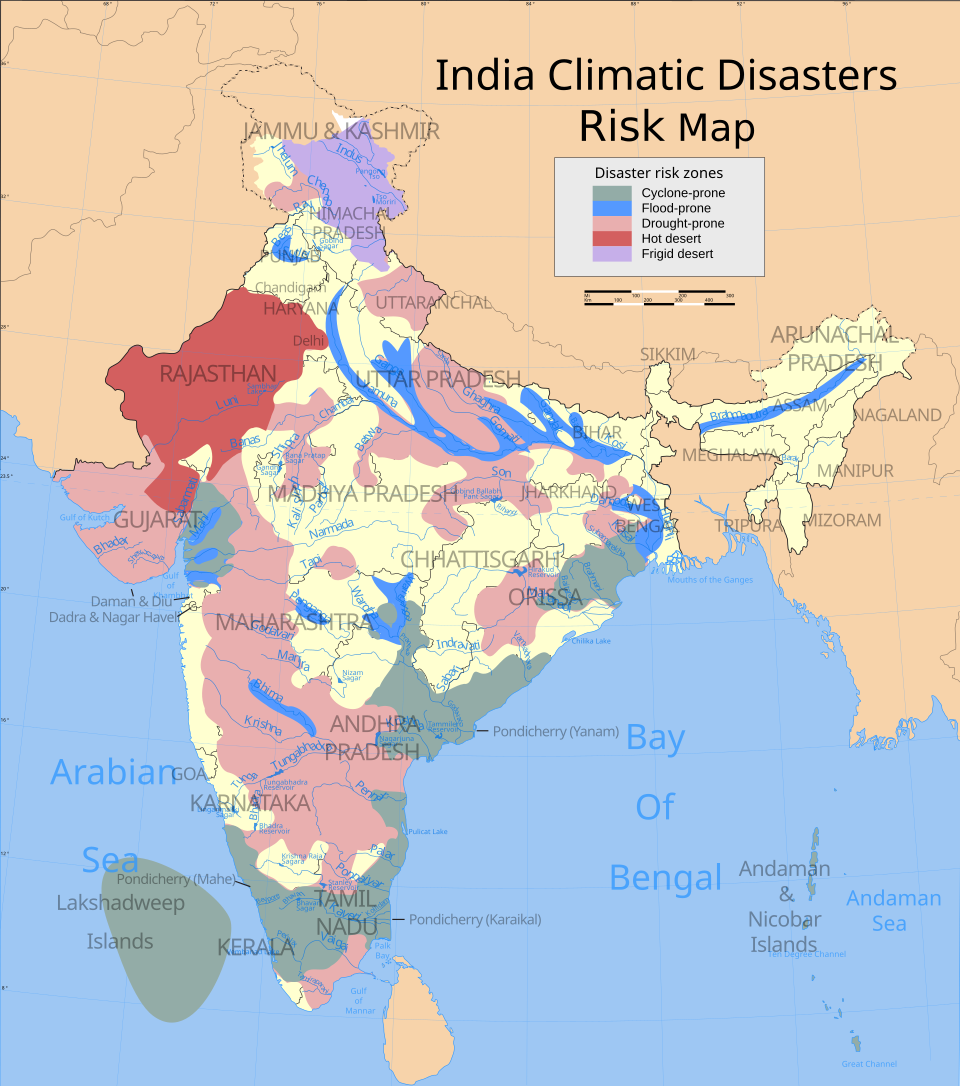
A Multi‑Hazard Nation
According to hazard and vulnerability assessments, 27 out of India’s 36 states and union territories are prone to disasters of one type or another. More strikingly:
- Almost 58–59% of the landmass is susceptible to moderate to very high seismic activity, making earthquakes a major risk across large geographical areas.
- Over 40 million hectares (around 12% of total land) are prone to floods and riverbank erosion, particularly in the Gangetic plains and northeastern regions.
- Around 5,700 km of the coastline are vulnerable to cyclones and storm surges.
- A significant 68% of cultivable land is drought‑prone, especially in western and central India.
- Hilly terrains throughout the Himalayas and Western Ghats are at risk from landslides and avalanches.
This multi‑hazard profile illustrates why India faces a complex disaster scenario rather than a one‑dimensional risk.
Types of Disasters That Shape India’s Risk Landscape
India’s disasters can broadly be classified into natural hazards and human‑induced or technological disasters, each with distinct drivers and consequences.
- Natural Disasters
Earthquakes
India lies at the confluence of major tectonic plates, contributing to frequent seismic activity, especially in the Himalayan region, northeastern states, and parts of the Western Ghats and Gujarat. Because seismic zoning covers more than half the country’s land area, the threat of earthquakes remains a constant concern for infrastructure and urban planning.
Floods and Flash Floods
Annual monsoon rainfall brings vital water for agriculture but also triggers floods each year. From the Brahmaputra basin in Assam to the Gangetic plains in Bihar and Uttar Pradesh, flooding remains one of the most recurrent disasters, with severe urban and rural impacts alike. Recent events like the 2024 Vijayawada floods in Andhra Pradesh underscored vulnerabilities in urban flood management, leading to deaths and displacement of hundreds of thousands of people.
Cyclones and Coastal Storms
Cyclones originating in the Bay of Bengal and Arabian Sea regularly affect India’s eastern and western coasts. These storms bring extreme winds, storm surges, and heavy rainfall. Historical cyclones like the 1998 Gujarat cyclone resulted in massive devastation, while recent events such as Cyclone Montha in 2025 demonstrated changing patterns and preparedness needs.
Droughts
Climate variability and monsoon irregularity mean that long dry spells and water scarcity affect agriculture and rural livelihoods. Central and western India frequently experiences drought conditions, amplifying agrarian distress.
Heatwaves
Emerging as a major hazard with climate change, heatwaves have caused widespread health impacts and mortality. The 2024 Indian heat wave saw record high temperatures and thousands of heat‑related hospitalizations and deaths, highlighting extreme heat as a growing disaster risk.
Landslides and Cloudbursts
Mountainous regions like Uttarakhand, Himachal Pradesh, and the Northeast are prone to landslides and sudden cloudburst‑triggered flash floods, which cause infrastructure damage and deaths during intense rainfall events.
- Human‑Induced and Technological Disasters
While natural hazards dominate India’s disaster profile, human activities also contribute to technological risks, including industrial accidents, chemical spills, and fire hazards in urban areas. Rapid urbanization and unplanned development in high‑risk zones can compound natural vulnerabilities.
The Impact of Disasters
Disasters in India result in loss of human life, livelihood disruption, and economic damages each year. Government data reported thousands of deaths due to extreme natural events in 2024–25, marking an increase compared to recent years.
Beyond fatalities, disasters have deep socioeconomic impacts: they displace populations, destroy crops and infrastructure, and divert resources from development goals. Climate‑linked events like cyclones, floods, and heatwaves have increasingly large impacts, pushing policy innovations such as discussions on climate‑linked insurance programs for quicker financial relief.
Towards Resilience: Disaster Management Evolution
In response to its complex risk landscape, India’s disaster management approach has evolved from merely relief‑centric responses to mitigation, preparedness, and resilience building. The National Disaster Management Authority (NDMA) and associated agencies focus on early warning systems, community awareness, and risk reduction strategies tailored to specific hazards.
Conclusion
India’s disaster profile reflects a multifaceted challenge shaped by nature and human factors alike. Understanding this landscape — from earthquakes and floods to droughts and heatwaves — is critical for policymakers, communities, and individuals. Strengthening resilience through preparedness, scientific planning, and community involvement remains central to reducing the toll of disasters and steering India toward sustainable development.
Note: Topic important for UPSC, HPAS, State PCS