
Core Values in public service/ governance
GS-1, Unit-3, Sub Unit-2, HPAS Mains
Governance in the twenty-first century operates under an unprecedented spotlight. The expansion of transparency laws, the rise of social media, and the instant circulation of information have fundamentally altered the relationship between the state and citizens. Governments today are no longer judged only by their policies and outcomes, but also by their ethical conduct, responsiveness, and accountability in the public sphere. In this context, ethical governance has emerged not merely as a moral ideal, but as a practical necessity for sustaining legitimacy and public trust.
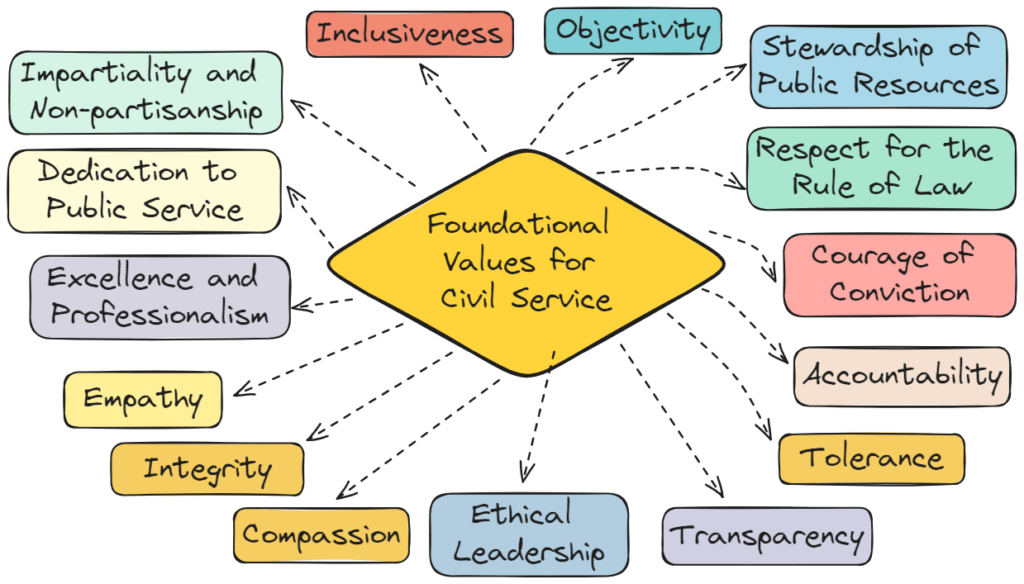
Transparency as a Democratic Imperative
Transparency is widely regarded as the cornerstone of ethical governance. Instruments such as the Right to Information, open data portals, social audits, and citizen charters aim to reduce information asymmetry between the government and the governed. By making decision-making processes visible, transparency discourages corruption, arbitrariness, and abuse of power.
However, transparency alone does not guarantee ethical governance. Information must be accurate, timely, and accessible. Selective disclosure, data overload, or opaque technical language can undermine the spirit of transparency. Ethical governance therefore requires not only openness, but also honesty and clarity in communication. Transparency should empower citizens to understand and evaluate government actions, not merely overwhelm them with data.
Social Media: A Double-Edged Sword
Social media has transformed governance by enabling real-time interaction between citizens and the state. Platforms such as X, Facebook, and Instagram allow public officials to disseminate information quickly, address grievances, and project accessibility. Grassroots movements, whistleblowers, and marginalized voices have found powerful platforms to challenge injustice and demand accountability.
At the same time, social media poses serious ethical challenges. The rapid spread of misinformation, sensationalism, and polarizing narratives can distort public discourse. Governance decisions are increasingly subjected to “trial by social media,” where public pressure, rather than due process, may influence outcomes. Ethical governance must therefore strike a balance between being responsive to public sentiment and remaining anchored in constitutional values, rule of law, and evidence-based decision-making.
Accountability in the Digital Age
Digital transparency and social media have reshaped accountability mechanisms. Citizens now expect immediate explanations for policy decisions, administrative lapses, and crises. Silence or delayed responses are often interpreted as guilt or incompetence. This has compelled governments to become more proactive in communication and crisis management.
However, ethical accountability goes beyond public relations. Issuing statements or tweets cannot substitute for institutional accountability through audits, parliamentary oversight, judicial review, and independent watchdogs. Ethical governance demands that digital engagement complements, rather than replaces, established democratic institutions.
Ethical Challenges for Public Servants
Public servants today operate under constant public scrutiny. Their actions, statements, and even personal conduct can quickly become viral content. While this enhances accountability, it also creates ethical dilemmas. Fear of online backlash may encourage risk-averse behaviour, populist decision-making, or avoidance of necessary but unpopular reforms.
Moreover, the use of social media by public officials raises questions about neutrality, confidentiality, and decorum. Ethical governance requires clear codes of conduct that guide officials on responsible digital behaviour, ensuring that freedom of expression does not compromise institutional integrity or public trust.
Technology, Surveillance, and Privacy
The pursuit of transparency must be balanced against the right to privacy. Digital governance tools, surveillance technologies, and data-driven policymaking can improve efficiency and service delivery. Yet, excessive data collection or misuse of personal information can lead to ethical violations and erosion of civil liberties.
Ethical governance in the age of transparency therefore demands strong data protection frameworks, informed consent, and accountability in the use of technology. Citizens should not have to trade their privacy for efficient governance.
Building an Ethical Governance Ecosystem
Ethical governance in a transparent and digitally connected world cannot rely solely on laws and technologies. It requires a culture of ethics rooted in values such as integrity, impartiality, empathy, and responsibility. Ethical leadership plays a crucial role in setting standards, encouraging moral courage, and fostering trust.
Capacity building of public servants, ethical training, independent institutions, and active civil society participation are essential components of this ecosystem. Citizens, too, have a role to play by engaging responsibly on social media, verifying information, and holding authorities accountable through constructive means.
Conclusion
The age of transparency and social media has irreversibly changed the nature of governance. While it has empowered citizens and strengthened accountability, it has also introduced new ethical challenges related to misinformation, populism, privacy, and institutional integrity. Ethical governance in this era requires more than visibility; it requires wisdom, restraint, and a steadfast commitment to democratic values.
Ultimately, transparency and social media are tools. Whether they strengthen or weaken governance depends on the ethical foundations upon which they are used. In a world where trust is fragile and information travels faster than truth, ethical governance remains the most reliable anchor of a functioning democracy.
Note: Topic important for UPSC, HPAS, State PCS