
Fascist Ideology: Origins, Evolution, and Global Impact
GS-1, Unit-1, Sub Unit-2, HPAS Mains
Fascism is one of the most powerful—and dangerous—political ideologies of the modern world. Emerging as a response to economic crisis, social disorder, and political uncertainty, it promised national unity, strength, and revival. Yet, beneath its appeal lay authoritarianism, extreme nationalism, and violent suppression of dissent. To understand why fascism remains an ideological reference point even today, it is important to explore its origins, evolution, and global impact across the last century.
Origins of Fascist Ideology
Fascism first emerged in Europe after World War I, a time when political systems were collapsing, economies were shattered, and societies felt deeply insecure. The ideology was shaped by several forces:
- Post-War Economic and Social Crisis
The First World War left millions of dead, economies devastated, and people disillusioned with existing political structures. In Italy and Germany, inflation, unemployment, and social unrest created fertile ground for radical ideologies that promised order and stability. - Fear of Socialism and Communism
The 1917 Russian Revolution had created widespread fear among elites, business groups, and conservative classes. Fascism positioned itself as the strong alternative to communism, defending private property, traditional hierarchies, and national interests while rejecting democratic pluralism. - Disillusionment with Liberal Democracy
Many people viewed parliamentary politics as weak, slow, and incapable of handling national crises. Fascist leaders exploited this dissatisfaction, arguing that democracy leads to chaos, division, and national decline. - Charismatic Leadership and Mass Mobilization
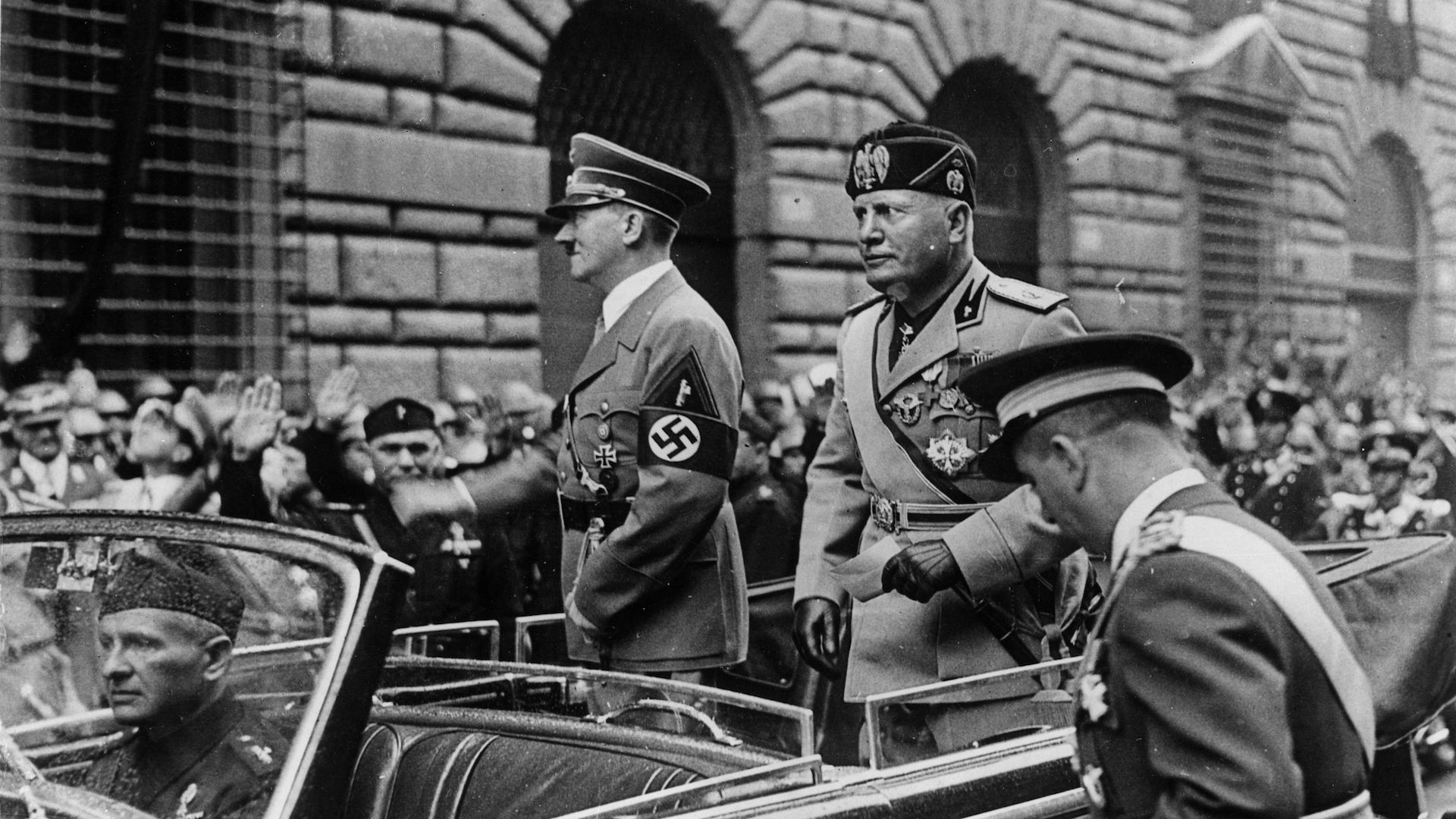
Figures like Benito Mussolini in Italy and Adolf Hitler in Germany played a central role. They used fiery speeches, powerful symbols, and mass rallies to inspire unity and loyalty. Fascism emerged not only as a political program but as a mass emotional movement.
Together, these conditions shaped early fascism into an ideology that promised strength and unity in times of chaos—while promoting extreme nationalism, militarism, and obedience.
Core Elements of Fascist Ideology
Although fascist movements differed between countries, several core principles remained consistent:
- Ultra-nationalism
- Authoritarian leadership
- Rejection of democracy
- Militarism and glorification of violence
- Racial or cultural purity
- State control of society and economy
These features created a governance model that was deeply repressive, expansionist, and hostile to human rights.
Evolution of Fascism
- Classical Fascism (1920s–1945)
The first wave of fascism was defined by two regimes:
- Mussolini’s Italy (1922–1943) – the birthplace of fascism, emphasizing national unity, corporatism, and militarism.
- Hitler’s Nazi Germany (1933–1945) – combining fascist authoritarianism with extreme racial ideology, leading to genocide and global war.
Other variants emerged in Spain (under Franco), Portugal (under Salazar), and parts of Eastern Europe. This era ended with the defeat of Axis powers in World War II, revealing the catastrophic consequences of fascist expansionism.
- Post-War Neo-Fascism (1945–1980s)
After WWII, fascism was globally discredited, but smaller groups revived aspects of it. These movements:
- rejected open dictatorship,
- adopted nationalism instead of explicit fascist symbols,
- opposed immigration, socialism, and liberalism.
In parts of Europe and Latin America, military dictatorships exhibited fascist traits—authoritarianism, suppression of dissent, and hyper-nationalism—even if they avoided the fascist label.
- Contemporary Far-Right Movements (1990s–Present)
The post-Cold War era, globalization, economic inequality, and rising cultural anxieties have given space to new movements that echo fascist ideas without calling themselves fascist. Key trends include:
- strong anti-immigrant rhetoric,
- identity-based nationalism,
- attacks on democratic institutions,
- glorification of strongman politics,
- spread of propaganda and conspiracy theories through digital media.
These movements are not identical to classical fascism, but they draw heavily from its ideological roots.
Global Impact of Fascist Ideology
The global impact of fascism can be viewed in three main dimensions: historical destruction, political influence, and contemporary challenges.
- Historical Catastrophe
The most devastating impact was World War II, directly triggered by fascist aggression:
- Over 70 million deaths
- The Holocaust (6 million Jews murdered)
- Genocides against Roma, Slavs, and other minorities
- Massive destruction across Europe and Asia
Fascism’s legacy is therefore etched into global memory as a warning of ideological extremism.
- Reshaping International Politics
The aftermath of fascism transformed global governance:
- Formation of the United Nations
- Growth of human rights frameworks
- Creation of the European Union
- Constitutional safeguards against authoritarianism
Paradoxically, fascism’s fall strengthened global commitments to peace, human rights, and democracy.
- Influence on Modern Politics
Today, fascist ideas continue to influence political debates through:
- rise of strongman leaders,
- erosion of democratic norms,
- polarization,
- digital propaganda,
- revival of extremist groups.
Though modern movements may avoid fascist symbols, their rhetoric often mirrors historical fascist strategies—especially in their appeals to fear, cultural insecurity, and anti-democratic impulses.
Conclusion
Fascist ideology, born from crisis and fear, reshaped the 20th century and left a permanent imprint on world history. While its classical forms were defeated, its core ideas continue to evolve and influence political movements across the globe. Understanding its origins, evolution, and global impact is essential to defending democratic values and ensuring societies remain vigilant against the rise of new authoritarian and extremist forces.