
Gandhi’s Ethical Framework: Truth, Ahimsa and Political Action
GS-1, Unit-3, Sub Unit-2, HPAS Mains
Mahatma Gandhi stands among the rare political leaders whose philosophy was not merely a strategy for power but a deeply rooted ethical framework. His approach to politics emerged from moral principles rather than political convenience. At the center of his thought were three interconnected pillars — Truth (Satya), Ahimsa (Non-violence), and Ethical Political Action through Satyagraha. For Gandhi, politics without morality was empty, and morality without action was incomplete. His framework transformed political struggle into a moral and spiritual discipline.
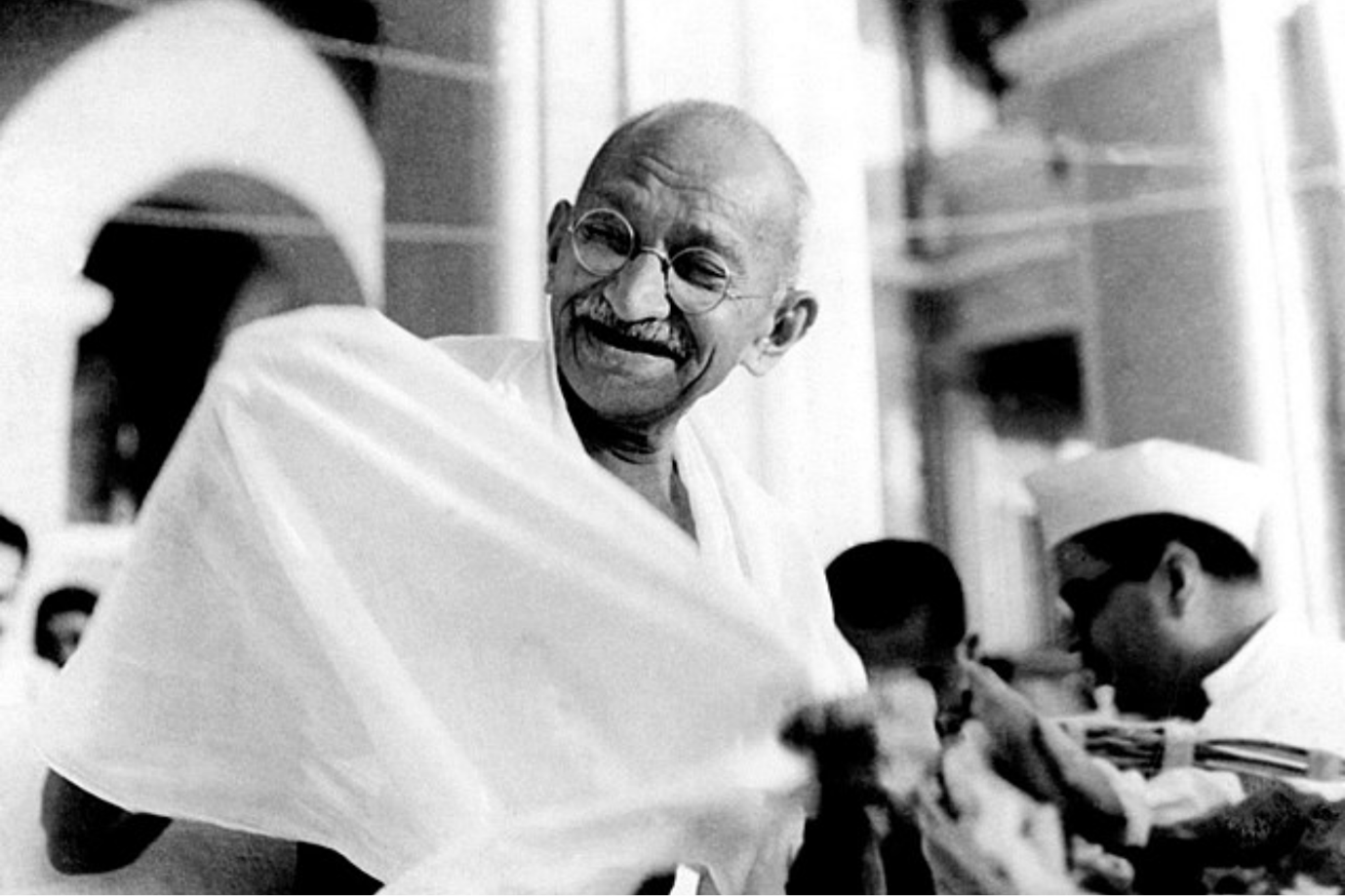
Truth as the Supreme Principle
Truth was the foundation of Gandhi’s entire philosophy. He did not see truth simply as factual correctness but as a universal moral reality. Gandhi famously declared, “Truth is God,” reversing the common phrase “God is Truth.” This shows how central truth was to his worldview. Truth, for him, meant alignment of thought, speech, and action. It demanded honesty, transparency, and integrity in personal as well as public life.
Gandhi believed that no individual possesses absolute truth. Each person sees only a part of it. Therefore, humility and openness were necessary in social and political engagement. This belief encouraged tolerance and dialogue instead of dogmatism. In politics, this meant respecting opponents, listening to criticism, and being willing to correct oneself. Truth was not to be imposed by force but discovered through moral effort and collective reasoning.
Ahimsa as the Method of Truth
If truth was the goal, Ahimsa (non-violence) was the method. Gandhi treated non-violence not as passive avoidance of harm but as an active force of love and compassion. Ahimsa required resisting injustice without hatred toward the wrongdoer. It separated the evil from the evildoer. Violence, Gandhi argued, corrupts both victim and perpetrator, whereas non-violence seeks transformation of both.
Ahimsa, in Gandhi’s ethics, extended beyond physical violence. It included non-violence in speech, intention, and social structures. Exploitation, discrimination, and oppression were also forms of violence. Therefore, his non-violence demanded social reform — removal of untouchability, communal harmony, gender dignity, and economic justice.
Critics often dismissed non-violence as impractical. Gandhi responded that violence may produce quick results but leaves deep moral damage. Non-violence, though slower, builds lasting peace and moral legitimacy. For him, courage was essential to non-violence. He maintained that cowardice was worse than violence, because non-violence requires inner strength and fearlessness.
Unity of Ends and Means
One of Gandhi’s most significant ethical contributions was his insistence on the unity of ends and means. He rejected the idea that noble goals justify immoral methods. According to him, means are seeds and ends are trees — the nature of the seed determines the nature of the outcome. If freedom is achieved through hatred and bloodshed, it will produce a violent society. If justice is pursued through unjust methods, it will remain hollow.
This principle sharply contrasted with many political ideologies that justify deception, coercion, or violence for larger goals. Gandhi argued that ethical discipline in methods is not a weakness but a strength. It ensures that political victory does not destroy moral character. Thus, truth and non-violence were not just moral ideals but operational rules in political struggle.
Satyagraha: Ethical Political Action
Gandhi translated truth and non-violence into political action through Satyagraha, meaning “holding firmly to truth.” Satyagraha was not passive resistance; it was active, disciplined, and morally grounded resistance. It involved civil disobedience, non-cooperation, fasting, and peaceful protest. Its purpose was not to defeat the opponent but to awaken their conscience.
Satyagraha required strict ethical preparation — self-control, willingness to suffer, and absence of hatred. Gandhi believed that voluntary suffering has transformative power. When protesters accept suffering without retaliation, they expose injustice and morally pressure the oppressor. This shifts conflict from physical force to moral force.
Movements like the Champaran Satyagraha, the Salt March, and Quit India demonstrated how ethical action could mobilize masses without armed rebellion. Gandhi showed that political struggle could be conducted with moral discipline and civic responsibility.
Religion and Politics in Gandhi’s Ethics
Gandhi did not separate religion from politics, but his understanding of religion was ethical, not sectarian. Religion for him meant universal moral values — truth, compassion, self-restraint, and service. He opposed the use of religion for division or political gain. Instead, he wanted politics to be guided by spiritual ethics.
He supported equal respect for all religions and promoted interfaith harmony. His idea of a moral state was not theocratic but value-based. Politics should uplift human dignity and moral responsibility, not merely manage power.
Contemporary Relevance
Gandhi’s ethical framework remains highly relevant in today’s world of polarized politics, misinformation, and violent conflict. His stress on truth challenges the culture of propaganda and post-truth narratives. His non-violence offers methods for peaceful protest and social change. His insistence on ethical means questions corruption and power-driven politics.
Modern movements for civil rights, environmental justice, and democratic freedoms continue to draw inspiration from Gandhian methods. Leaders like Martin Luther King Jr. and Nelson Mandela adapted his principles to different contexts, proving their universal value.
Conclusion
Gandhi’s ethical framework united truth, non-violence, and political action into a coherent philosophy of social change. He demonstrated that morality is not separate from politics but essential to it. Truth provided direction, Ahimsa provided method, and Satyagraha provided practice. His message was clear: lasting political transformation must rest on ethical foundations. In an age where power often overshadows principle, Gandhi’s model remains a powerful reminder that moral courage can shape history.
Note: Topic important for UPSC Exam, HPAS, State PCS