
Himachal Pradesh’s Hydroelectric Potential and Its Complex Legacy
GS-3, Unit-1, Sub Unit-3, HPAS Mains
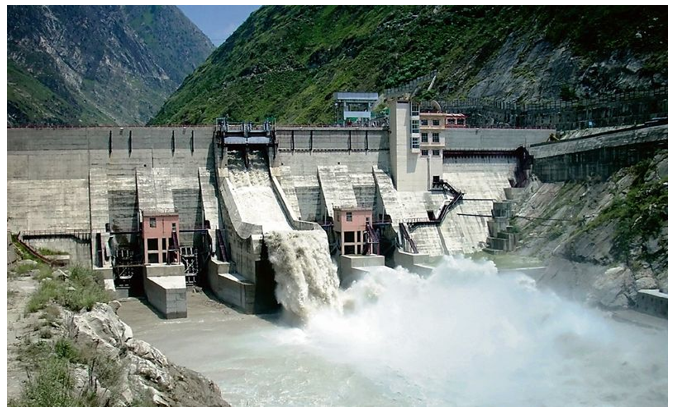
Himachal Pradesh, often dubbed the “Power State” of India, holds an immense and crucial position in the nation’s energy landscape due to its vast hydroelectric potential. Crisscrossed by perennial rivers like the Sutlej, Beas, Ravi, Chenab, and Yamuna, the state is blessed with approximately 25% of India’s total hydropower potential, estimated at a staggering 27,436 MW. This natural bounty has been seen as the backbone of Himachal’s economy and a key to India’s renewable energy goals.
Potential and Significance for Himachal
Hydroelectric projects convert the kinetic energy of flowing water into electricity, offering a clean and renewable energy source. For Himachal Pradesh, this translates into:
- Revenue Generation: Power sales to other states contribute significantly to the state exchequer, providing funds for development projects, infrastructure, and social welfare programs.
- Energy Security: Hydropower provides a reliable base-load power, reducing dependence on fossil fuels and enhancing energy security for the state and the nation.
- Employment Opportunities: Construction and operation of projects, though often temporary, create jobs for engineers, skilled labourers, and local communities.
- Infrastructure Development: Roads, bridges, and other facilities built for projects often benefit local populations, improving connectivity and access to markets and services.
- Leadership in Green Energy: Himachal positions itself as a leader in clean energy, aligning with national and global commitments to combat climate change.
Major projects like the Nathpa Jhakri Hydroelectric Project (1500 MW on Sutlej River), the Karcham Wangtoo Hydroelectric Plant (1091 MW on Sutlej), and the Bhakra Nangal Project (partially in Himachal, 1325 MW on Sutlej) exemplify this immense harnessed potential, feeding electricity into the national grid.
Impacts: The Double-Edged Current
While promising, hydropower development is not without its significant social, economic, and environmental impacts:
Social Impacts:
- Displacement and Rehabilitation: The most contentious issue, large dams often necessitate the displacement of local communities, submerging their homes, agricultural lands, and ancestral sites. Adequate compensation and timely rehabilitation remain persistent challenges. The Larji Hydroelectric Project in Kullu, for example, faced controversies over its social impact.
- Loss of Livelihoods: Traditional livelihoods tied to rivers, such as fishing, farming in fertile riverine areas, and forest produce collection, can be disrupted, forcing communities to adapt to new economic activities.
- Cultural and Spiritual Disruption: Rivers often hold deep cultural and spiritual significance. Altering their flow or submerging sacred sites can lead to a profound sense of loss among local populations.
- Influx of Migrant Labor: Large projects attract external labour, which can sometimes lead to social tensions, strain on local resources, and changes in the demographic fabric.
Economic Impacts:
- Initial Economic Boost: Construction brings an initial surge in economic activity, creating jobs and demand for local goods and services.
- Dependence on External Agencies: While the state gains revenue, control over large projects often rests with central public sector undertakings or private companies, limiting direct economic control for the local populace.
- Cost Overruns and Delays: Many projects face significant cost overruns and delays, impacting their overall economic viability.
- Unequal Distribution of Benefits: Benefits often accrue at the state or national level, while local communities bear the direct costs of displacement and environmental degradation.
Environmental Impacts:
- Habitat Alteration and Biodiversity Loss: Dams alter river ecosystems, disrupting fish migration routes and impacting aquatic biodiversity. Submergence of forests for reservoirs leads to habitat loss for terrestrial flora and fauna. Studies in Kinnaur, for instance, have shown how forest land diversion for hydropower threatens biodiversity.
- Sedimentation: Dams trap silt, leading to reservoir sedimentation, which reduces their lifespan and can cause downstream erosion. This is a significant concern in the geologically young and fragile Himalayas.
- Altered Flow Regimes: Changes in natural river flow patterns affect downstream ecosystems, impacting floodplains and wetlands, and the species dependent on them.
- Geological Instability: Construction activities, tunnelling, and reservoir creation in a seismically active and geologically fragile region like the Himalayas can increase the risk of landslides and seismic activity.
- Waste Generation: Construction activities generate significant amounts of muck and debris, which, if not properly managed, can pollute rivers and land.
Way Forward: Towards Sustainable Hydropower
Moving forward, Himachal Pradesh needs a balanced and sustainable approach to hydropower development:
- Comprehensive Environmental and Social Impact Assessments (ESIAs): Rigorous and transparent ESIAs, followed by effective mitigation strategies, are crucial before project approval. This must include cumulative impact assessments for projects in the same river basin.
- Just Rehabilitation and Resettlement Policies: Policies must ensure fair compensation, adequate and timely rehabilitation, and opportunities for alternative livelihoods for project-affected families. The recent cancellation of stalled projects by the Himachal Cabinet, aiming to re-advertise them with a uniform 12% free power royalty and 1% for Local Area Development Fund, is a step towards better local benefit sharing.
- Focus on Run-of-the-River Projects: Prioritizing smaller, run-of-the-river projects over large storage dams can minimize submergence and displacement, reducing environmental and social footprints.
- Community Participation: Involving local communities in decision-making processes, from planning to monitoring, is vital to ensure their concerns are addressed and they become genuine stakeholders.
- Technological Advancements and Monitoring: Utilizing advanced construction techniques to minimize environmental disturbance and implementing robust monitoring systems for water quality, biodiversity, and geological stability post-commissioning.
- Catchment Area Treatment: Investing heavily in afforestation and soil conservation in the catchment areas to reduce siltation in reservoirs.
- Exploring Other Renewables: While hydropower is key, diversifying the energy basket with solar, wind, and pumped storage technologies can reduce over-reliance on a single source and mitigate associated risks.
Himachal Pradesh’s rivers are its lifeblood and its economic backbone. By adopting a truly sustainable and socially responsible approach to hydropower, the state can continue to harness its potential while safeguarding its pristine environment and the well-being of its people. Check details for HPAS Exam Preparation.