
HP SHIVA Project: Revitalizing Horticulture in Himachal Pradesh
GS-3, Unit-1, Sub-Unit-3, HPAS Mains
Himachal Pradesh, often called the “Fruit Bowl of India,” has long relied on horticulture as a pillar of its rural economy. Apple, stone fruits, and off-season vegetables are not only major sources of income but also central to the state’s identity. However, climate change, erratic rainfall, and declining productivity have posed serious challenges to this sector. To address these issues and ensure sustainable growth, the Government of Himachal Pradesh launched the HP SHIVA Project (Himachal Pradesh Sub-tropical Horticulture, Irrigation, and Value Addition Project).
The State Government is implementing the project with external funding support from agencies including Japan International Cooperation Agency (JICA) and the ADB. Current estimates put its value at ₹1,292 crore, covering horticulture, irrigation, and solar fencing components.
Objectives of the HP SHIVA Project
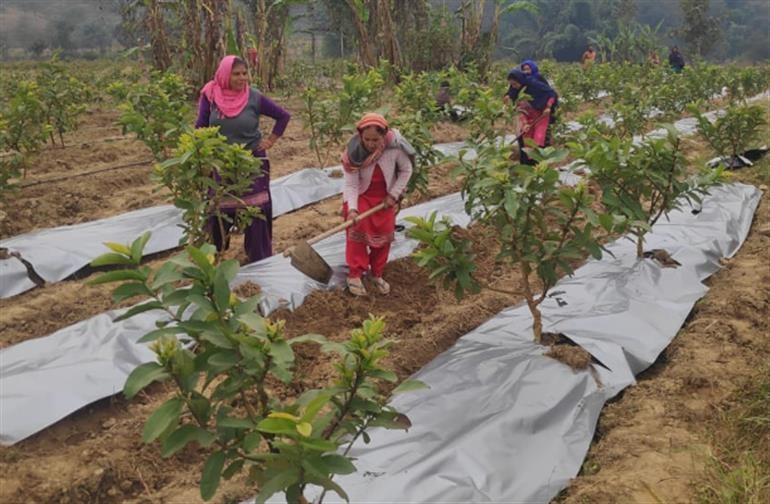
- Crop Diversification: Traditionally, apple dominates the horticulture landscape in Himachal Pradesh. But with rising temperatures affecting apple belts, SHIVA encourages farmers to shift towards sub-tropical fruits like mango, guava, litchi, pomegranate, citrus, and persimmon.
- Water Resource Management: Irrigation has always been a bottleneck in hilly terrain. The project emphasizes micro-irrigation, water harvesting structures, and efficient resource management to ensure year-round cultivation.
- Infrastructure for Value Addition: Farmers often face losses due to perishability of fruits and vegetables. SHIVA provides pack houses, cold storage facilities, and processing units to reduce post-harvest losses and improve marketability.
- Capacity Building and Skill Development: Training programs, exposure visits, and technical guidance are integral parts of the project to empower farmers with modern cultivation techniques.
- Market Linkages and Branding: By establishing Farmer Producer Organizations (FPOs), SHIVA strengthens collective bargaining power and connects growers with larger markets. Branding Himachali fruits for quality assurance is another focus.
Recent Developments (2025)
- Expansion into Exotic Fruits
In a significant extension, SHIVA now includes cultivation of exotic fruits—such as avocado, blueberry, dragon fruit, and macadamia nut. This expansion targets seven districts: Sirmaur, Solan, Una, Bilaspur, Hamirpur, Kangra, and Mandi.
- Scale: Plans are in motion to plant over 1 crore fruit saplings across approximately 6,000 hectares.
- Irrigation: Out of 162 proposed micro-irrigation schemes, 136 are already underway, covering 215 clusters across ~3,000 hectares. Plantations in 55 clusters have either been established or are ongoing.
- Cluster-Level Impact
As of April 2025, notable progress was made in Mandi district:
- Kinnow (mosambi): 7,499 plants planted over 6.75 hectares, aiding 36 farmers.
- Japanese persimmon: 9,699 saplings across 8.73 hectares, benefiting 26 farmers.
- Additional 3,806 persimmon plants over 6.08 hectares, helping 75 farmers.
- Plum plantations: 4,388 trees spread over 6.63 hectares, supporting 47 farmers.
These clusters are equipped with solar fencing and efficient irrigation systems, boosting yields and protecting investments.
Expected Benefits
- Economic Upliftment of Farmers: Diversification into sub-tropical fruits can provide steady incomes, reduce risks from crop failures, and make farming more resilient.
- Employment Generation: Post-harvest facilities and value-addition activities are expected to generate rural employment, especially for women and youth.
- Climate Resilience: By shifting away from climate-vulnerable apple belts, the project helps farmers adapt to changing weather conditions.
- Export Potential: With improved quality, branding, and packaging, Himachal fruits can penetrate national and international markets.
- Sustainable Rural Growth: Enhanced farmer organizations and market linkages ensure long-term sustainability, reducing dependence on middlemen.
Challenges Ahead
- Adoption Hurdles: Many farmers remain hesitant to shift from traditional crops like apple and maize to new fruits.
- Market Volatility: Prices of horticultural produce fluctuate, and small farmers are vulnerable.
- Infrastructure Gaps: Cold chain and storage facilities are still insufficient in remote areas.
- Climate Uncertainty: Despite diversification, erratic monsoons and rising temperatures remain a threat.
Way Forward
For the SHIVA Project to succeed, sustained efforts are needed:
- Strengthening extension services so farmers receive continuous technical support.
- Expanding research and development for high-yield, climate-resilient varieties.
- Ensuring public-private partnerships in cold storage, logistics, and marketing.
- Encouraging digital platforms for e-marketing and transparent price discovery.
Conclusion
The HP SHIVA Project is more than a horticulture program; it is a vision for a resilient, diversified, and prosperous Himachal Pradesh. By integrating modern technology with traditional farming wisdom, it aims to empower farmers, enhance rural livelihoods, and position the state as a hub of high-quality sub-tropical fruits. If implemented effectively, SHIVA could become a model for other hill states in India striving for sustainable agricultural transformation.