
Human Aspects of Population: Distribution, Urbanisation and Internal Migration in India
GS-1, Unit-2, Sub Unit-2, HPAS Mains
India is home to more than 1.4 billion people, making it the most populous country in the world. This enormous population is marked by wide variations in spatial distribution, rapid urbanisation, and large-scale internal migration. These human aspects of population are shaped by the interaction of physical environment, economic opportunities, historical processes, and socio-cultural factors. Understanding these dimensions is essential for planning, inclusive growth, and sustainable development in India.
Population Distribution in India
Population distribution in India is highly uneven. According to the Census of India 2011, the average population density of India was 382 persons per sq km, but this national average hides sharp regional contrasts.
The Indo-Gangetic Plains—covering states like Uttar Pradesh, Bihar, West Bengal, and Punjab—are among the most densely populated regions due to fertile alluvial soil, assured water supply, flat terrain, and long history of settled agriculture. For example, Bihar has a population density of over 1,100 persons per sq km, one of the highest in the country.
Similarly, coastal plains and deltaic regions such as Kerala, Tamil Nadu, and parts of Andhra Pradesh support dense populations because of favourable climate, port-based trade, and better infrastructure.
In contrast, regions like the Thar Desert, Himalayan states, forest-dominated areas of Chhattisgarh, and the cold desert of Ladakh have low population density due to harsh climatic conditions, rugged terrain, and limited economic activities. Arunachal Pradesh, for instance, has a density of only 17 persons per sq km.
Human factors such as industrialisation, transport connectivity, and urban centres further influence population distribution, leading to the concentration of people in metropolitan regions.
Urbanisation in India
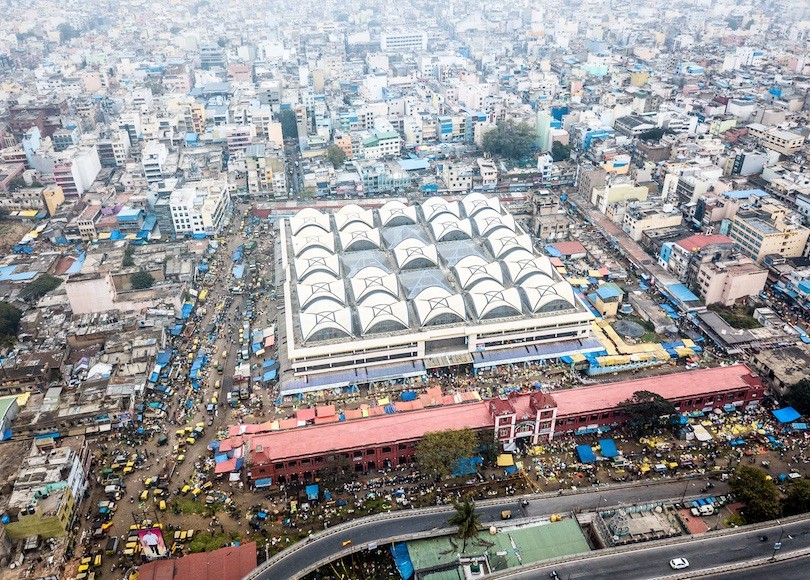
Urbanisation refers to the increasing share of population residing in urban areas. As per Census 2011, about 31.1% of India’s population lived in urban areas, up from 27.8% in 2001. Though India is still predominantly rural, the absolute size of its urban population exceeds 460 million, larger than the total population of many countries.
India has 53 urban agglomerations with more than one million population, including Mumbai, Delhi, Kolkata, Chennai, Bengaluru, Hyderabad, and Ahmedabad. These cities act as engines of economic growth, contributing nearly two-thirds of India’s GDP.
Post-1991 economic liberalisation, growth of the service sector, IT and start-up ecosystem, and industrial corridors have accelerated urban population growth. However, urbanisation in India is often unplanned, leading to problems such as housing shortages, slums, traffic congestion, air and water pollution, and strain on civic services. Nearly 17% of India’s urban population lives in slums, as per official estimates.
Government initiatives like the Smart Cities Mission, AMRUT, and Swachh Bharat Mission (Urban) aim to improve urban governance, infrastructure, and quality of life, but challenges remain significant.
Internal Migration in India
Internal migration is a defining feature of India’s demographic landscape. The Census 2011 recorded over 450 million internal migrants, accounting for nearly 37% of the population. This makes internal migration one of the largest such movements in the world.
The most common form is rural-to-urban migration, driven by poverty, land fragmentation, lack of rural employment, and the pull of urban job opportunities. States like Uttar Pradesh, Bihar, Rajasthan, Odisha, and Jharkhand are major source regions, while Maharashtra, Delhi, Gujarat, Tamil Nadu, Karnataka, and Punjab are key destination regions.
Migration in India is also seasonal and circular, especially among construction workers, agricultural labourers, and informal sector workers. Importantly, marriage-related migration accounts for a large share of female migration, reflecting social and cultural practices.
Migration plays a crucial role in poverty reduction through remittances, which support rural households and local economies.
Impact of Migration and Urbanisation
Internal migration and urbanisation contribute positively to economic growth, labour mobility, and regional integration. Migrant workers sustain key sectors such as construction, manufacturing, domestic work, and urban services.
However, rapid and unregulated migration also creates challenges like informal employment, lack of social security, urban overcrowding, and marginalisation of migrants. The COVID-19 pandemic exposed the extreme vulnerability of migrant workers, highlighting gaps in urban planning, housing, and social protection systems.
Strengthening secondary cities, promoting rural non-farm employment, and ensuring portability of welfare benefits are crucial for managing migration sustainably.
Conclusion
India’s population distribution, urbanisation, and internal migration are deeply interconnected human processes. While population concentration in fertile plains and cities has driven economic development, it has also intensified regional disparities and urban stress. Internal migration continues to serve as both a livelihood strategy and a mirror of structural inequalities.
For India to harness its demographic dividend, there is a need for balanced regional development, planned urban growth, and inclusive policies for migrants. Understanding these human aspects of population is therefore essential for shaping a sustainable and equitable future for the country.