
India’s Act East Policy: Connecting the Nation to Asia’s Future
GS-2, Unit-3, Sub Unit-1, HPAS Mains
India’s rise as a major power is closely tied to its ability to engage dynamically with its Asian neighbours. One of the most prominent frameworks guiding this engagement is the Act East Policy (AEP), which has transformed India’s approach toward Southeast Asia and the broader Asia-Pacific. More than a foreign policy initiative, it is a strategic vision that combines diplomacy, trade, culture, and security cooperation to strengthen India’s position in the region.
From Look East to Act East: A Shift in Strategy
India’s engagement with Southeast Asia began in earnest with the Look East Policy launched in the early 1990s under Prime Minister P.V. Narasimha Rao. At the time, the primary objective was to overcome India’s economic isolation and tap into the vibrant economies of ASEAN (Association of Southeast Asian Nations).
In 2014, Prime Minister Narendra Modi upgraded this approach to the Act East Policy, signalling a more proactive stance. While “Look East” emphasized exploration and initial engagement, “Act East” highlights implementation, deeper connectivity, and stronger integration in the strategic and economic fabric of Asia.
Key Objectives of the Act East Policy
- Economic Integration
- Strengthen trade relations with ASEAN, which collectively represents one of India’s largest trading partners.
- Promote investment flows, industrial cooperation, and joint ventures, especially in technology, infrastructure, and energy.
- Connectivity and Infrastructure
- Develop road, rail, air, and digital connectivity between India’s Northeast and Southeast Asia.
- Major projects like the India–Myanmar–Thailand Trilateral Highway and Kaladan Multimodal Transit Transport Project are central to this vision.
- Strategic and Security Cooperation
- Collaborate on maritime security, counterterrorism, and defense partnerships in the Indo-Pacific.
- Enhance naval presence and joint exercises to secure sea lanes of communication.
- Cultural and People-to-People Ties
- Deepen bonds through shared heritage, Buddhism, and cultural exchanges.
- Encourage tourism, educational exchanges, and diaspora connections.
The Northeast as the Gateway
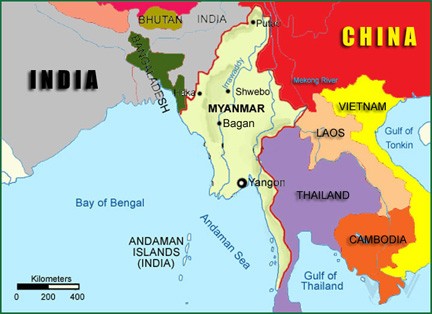
The Northeast region of India is crucial for the success of the Act East Policy. Sharing borders with Myanmar, Bangladesh, Bhutan, and China, this region provides the physical and cultural bridge between India and Southeast Asia. Developing infrastructure, boosting economic opportunities, and resolving insurgencies in the Northeast are essential for turning it into a hub of regional integration.
Strategic Importance in the Indo-Pacific
The Indo-Pacific has emerged as a geopolitical hotspot, with major powers vying for influence. India’s Act East Policy aligns with its broader Indo-Pacific vision of ensuring a free, open, inclusive, and rules-based order. By strengthening ties with ASEAN, Japan, South Korea, and Australia, India enhances its role as a balancing force amid rising tensions, particularly in the South China Sea.
The policy also complements initiatives like the Quad grouping (India, U.S., Japan, Australia), focusing on maritime security, supply chain resilience, and technological cooperation.
Achievements So Far
- Economic Ties: ASEAN is India’s fourth-largest trading partner, with bilateral trade crossing USD 110 billion in recent years.
- Connectivity Projects: Steady progress on the Trilateral Highway and Kaladan project, despite challenges.
- Defense Cooperation: Enhanced naval exercises such as MALABAR and bilateral defense pacts with Vietnam, Indonesia, and Singapore.
- Cultural Diplomacy: Celebration of shared Buddhist heritage and growing academic exchanges.
Challenges to Implementation
- Connectivity Delays – Infrastructure projects often face delays due to funding, terrain, and political hurdles.
- Security Issues – Insurgencies and instability in the Northeast and Myanmar pose risks.
- Chinese Influence – China’s economic and strategic clout in Southeast Asia, through projects like the Belt and Road Initiative (BRI), creates stiff competition for India.
- Trade Imbalances – India’s trade deficit with ASEAN remains significant, raising concerns among domestic industries.
The Road Ahead
For the Act East Policy to succeed, India must adopt a multi-pronged strategy:
- Speed Up Connectivity Projects: Prioritize completion of the Trilateral Highway and digital corridors.
- Strengthen Regional Partnerships: Deepen economic and security ties not just with ASEAN but also with Japan, South Korea, and Australia.
- Boost the Northeast: Invest in local infrastructure, skill development, and industrial hubs to make it a true gateway.
- Leverage Soft Power: Expand cultural diplomacy and academic ties to foster goodwill in the region.
Conclusion
India’s Act East Policy represents more than just a foreign policy shift—it is a vision to place India at the heart of Asia’s economic and strategic future. By linking its Northeast with Southeast Asia, enhancing maritime cooperation, and fostering cultural ties, India is positioning itself as both a bridge and a balancing force in the Indo-Pacific.
While challenges remain, the Act East Policy offers India a powerful pathway to secure its interests, expand its influence, and contribute to a stable, prosperous, and interconnected Asia.