
India’s Balancing Act: Navigating BRICS, QUAD & the Indo-Pacific
GS-2, Unit-3, Sub Unit-1, HPAS Mains
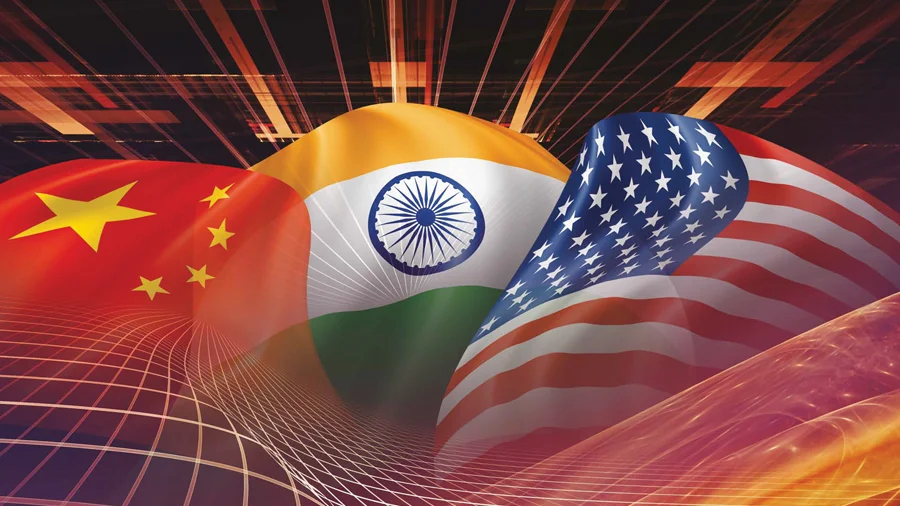
India’s foreign policy in the 21st century is characterized by strategic autonomy, multi-alignment, and the ability to engage across rival geopolitical platforms. Nowhere is this more visible than in India’s simultaneous participation in BRICS, the QUAD, and the broader Indo-Pacific strategic architecture. Each of these frameworks serves distinct objectives, yet they occasionally present conflicting expectations. India’s challenge—and opportunity—lies in harmonizing these engagements to strengthen national interests without being forced into rigid geopolitical camps.
BRICS: A Platform for Multipolarity and Global South Leadership
BRICS—Brazil, Russia, India, China, and South Africa—was created to give emerging economies a collective voice in global governance. With recent expansions (BRICS+), it has become a broader coalition aimed at shifting global power balances.
For India, BRICS offers several advantages:
- A Voice for Developing Countries
BRICS enables India to champion issues such as climate finance, development cooperation, reform of multilateral institutions, and fairer global trade practices.
- Alternative Financial Architecture
Institutions like the New Development Bank (NDB) and the Contingent Reserve Arrangement (CRA) help create alternatives to Western-dominated financial institutions such as the IMF and World Bank.
- Strategic Engagement with China and Russia
Despite tensions with China, BRICS provides a diplomatic space where India can engage with major powers on neutral ground, reducing friction and signalling its preference for dialogue over confrontation.
However, BRICS also poses challenges. China’s growing dominance and the platform’s possible drift toward an anti-West orientation sometimes place India in a delicate position, especially because India’s economic and security partnerships with Western democracies are simultaneously deepening.
The QUAD: A Strategic Response to Indo-Pacific Realities
The Quadrilateral Security Dialogue (QUAD)—comprising India, the U.S., Japan, and Australia—has emerged as a central pillar of India’s Indo-Pacific strategy. Though not a military alliance, QUAD focuses on connectivity, resilient supply chains, maritime cooperation, emerging technologies, health security, and disaster response.
For India, QUAD serves vital security and economic interests:
- Counterbalancing China in the Indo-Pacific
China’s assertiveness in the Indian Ocean, South China Sea, and along the LAC has heightened India’s strategic concerns. QUAD strengthens India’s ability to shape regional security norms and deter aggressive unilateralism.
- Access to Advanced Technology & Supply Chain Resilience
QUAD initiatives in 5G/6G, semiconductors, AI, and maritime domain awareness help India diversify away from Chinese systems and reduce external vulnerabilities.
- Upholding a Free, Open, and Rules-Based Indo-Pacific
QUAD’s vision aligns with India’s Act East Policy, SAGAR doctrine, and its aspiration to be a net security provider in the Indian Ocean Region.
Still, criticisms suggest that QUAD may antagonize China or pull India too close to the U.S. security network. India’s careful participation ensures cooperation without becoming part of a formal alliance.
Indo-Pacific Strategy: India’s Expanding Sphere of Influence
India sees the Indo-Pacific as a geographically and strategically interconnected region from East Africa to the western Pacific. Its Indo-Pacific approach rests on:
- ASEAN centrality
- Maritime security and freedom of navigation
- Connectivity and economic integration
- Partnerships with African littoral states
- Blue economy and sustainable development
Through platforms like IORA, IPOI, Quad Plus, and India–Pacific Islands cooperation, India positions itself as a stabilizing maritime force.
Balancing BRICS, QUAD & the Indo-Pacific: India’s Multi-Alignment Doctrine
India’s ability to engage with BRICS and QUAD simultaneously reflects its deeply embedded principle of strategic autonomy. It practices “issue-based alignment”, cooperating with different partners for different goals.
- Complementarity Over Contradiction
- BRICS helps India advocate Global South issues.
- QUAD enhances security, technology, and supply chain resilience.
- Indo-Pacific initiatives broaden India’s maritime influence.
The platforms serve different but complementary objectives.
- Managing China: Engagement + Deterrence
India uses BRICS to maintain diplomatic engagement with China while using QUAD and Indo-Pacific cooperation to balance aggressive Chinese postures. This dual approach prevents confrontation while protecting national interests.
- Preserving Autonomy Amid Great Power Rivalry
In the face of intensifying U.S.–China competition, India avoids taking sides. It collaborates with the U.S. for technology, with Russia for energy and defense, and with China within multilateral settings—demonstrating flexible and pragmatic diplomacy.
Conclusion: The Future of India’s Multi-Alignment Strategy
India’s navigation of BRICS, QUAD, and the Indo-Pacific exemplifies a confident foreign policy shaped by pragmatism and autonomy. As global politics shifts toward multipolarity and fragmentation, India’s capacity to maintain flexibility, diversify partners, and shape regional norms will define its emerging global role.
By engaging constructively across platforms, India positions itself not as a follower of blocs but as a shaper of the future world order—one that values sovereignty, inclusiveness, and balanced cooperation.