
India’s Maritime Security Policy – SAGAR
GS-2, Unit-3, Sub Unit-1, HPAS Mains
India’s geographical position, with a 7,500 km coastline and strategic access to the Indian Ocean, makes maritime security vital for its national and regional interests. Recognizing this, Prime Minister Narendra Modi articulated the vision of SAGAR (Security and Growth for All in the Region) in 2015. This policy is central to India’s maritime strategy and its role as a net security provider in the Indo-Pacific.
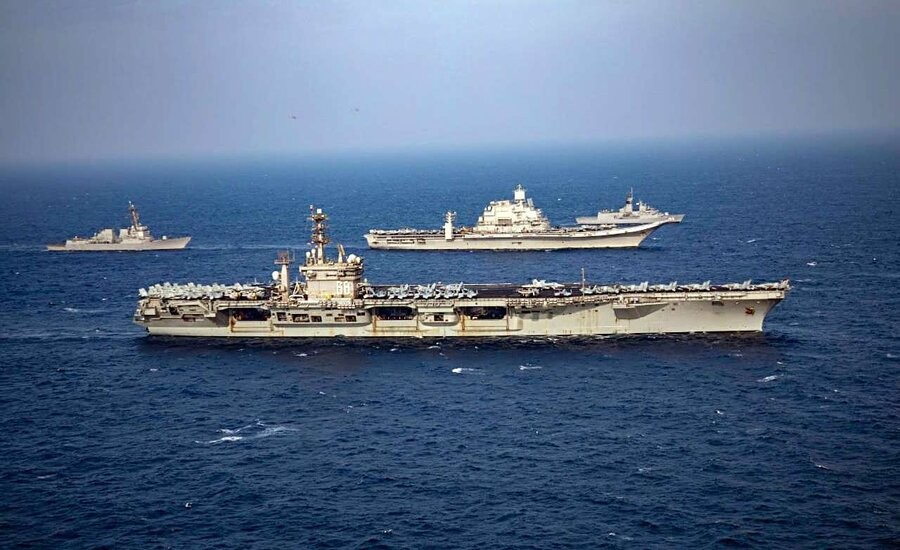
What is SAGAR?
- Launched in 2015 by PM Narendra Modi during his visit to Mauritius.
- Stands for “Security and Growth for All in the Region”.
- Aims to ensure a safe, secure, and stable Indian Ocean Region (IOR).
- Builds on India’s traditional role as a maritime power and its modern strategic aspirations.
Objectives of SAGAR
- Strengthen Maritime Security: Enhance surveillance, coastal security, and anti-piracy efforts.
- Promote Regional Growth: Encourage blue economy, sustainable fisheries, and maritime trade.
- Ensure Freedom of Navigation: Uphold international law (UNCLOS).
- Maritime Diplomacy: Build partnerships with littoral states.
- Disaster Response & Humanitarian Assistance and Disaster Relief (HADR): Provide humanitarian aid and disaster relief in the Indian Ocean.
Core Pillars of SAGAR
- Maritime Security Cooperation: Joint naval exercises, intelligence sharing, and patrols.
- Capacity Building of Neighbours: Training, equipment, and financial aid to smaller IOR nations.
- Blue Economy Development: Focus on ocean resources, shipping, ports, and renewable energy.
- Marine Environment Protection: Tackling climate change, pollution, and illegal fishing.
- Maritime Connectivity: Expansion of port infrastructure and trade corridors.
Strategic Significance of SAGAR
- Indian Ocean Geopolitics: The region is a hub for global trade (over 80% of world’s oil trade passes through).
- Countering China’s Influence: Acts as a strategic response to China’s Belt and Road Initiative (BRI) and growing presence in IOR.
- Regional Stability: Enhances trust with neighbours like Maldives, Mauritius, Seychelles, and Sri Lanka.
- National Security: Safeguards India’s Exclusive Economic Zone (EEZ) and shipping routes.
Key Initiatives under SAGAR
- Information Fusion Centre – Indian Ocean Region (IFC-IOR): Set up in Gurugram in 2018 for maritime domain awareness.
- Mission SAGAR (2020): India provided medical aid, food, and COVID-19 support to IOR countries.
- Humanitarian Assistance & Disaster Relief (HADR): Operations during cyclones, tsunamis, and maritime accidents.
- Coastal Security Mechanisms: Strengthening Indian Navy, Coast Guard, and coordination with state agencies.
- Collaboration with QUAD: (India, USA, Japan, Australia) to ensure Indo-Pacific security.
Role of the Indian Navy in SAGAR
- Acts as the primary enabler of SAGAR vision.
- Regular joint exercises (MALABAR, MILAN, IBSAMAR, etc.) with friendly navies.
- Anti-piracy patrols off Somalia and Gulf of Aden.
- Naval diplomacy: goodwill visits, port calls, and capacity-building in IOR nations.
Challenges to SAGAR
- China’s Maritime Expansion: String of Pearls strategy and military bases (e.g., Djibouti).
- Piracy & Terrorism: Threats in Gulf of Aden and possible maritime terror activities.
- Illegal, Unreported, and Unregulated (IUU) Fishing: Impacts food security and maritime livelihoods.
- Climate Change: Rising sea levels and frequent cyclones threaten coastal states.
- Coordination Issues: Between multiple stakeholders – Navy, Coast Guard, Ports, and local authorities.
Way Forward
- Strengthen Naval Modernization: Invest in aircraft carriers, submarines, and surveillance systems.
- Deepen Regional Partnerships: Expand ties with ASEAN, African littorals, and IOR countries.
- Leverage Technology: Use satellite-based monitoring, AI, and drones for maritime domain awareness.
- Promote Sustainable Blue Economy: Balance economic use of oceans with conservation.
- Global Leadership: Position India as a leader in Indo-Pacific maritime governance.
Conclusion
SAGAR is not just a maritime security policy; it is a vision that combines hard security with soft power, national interest with regional cooperation. By building trust, offering assistance, and standing up for international norms, India seeks to ensure that the Indian Ocean remains a zone of peace, stability, and shared prosperity. As global attention shifts to the Indo-Pacific, SAGAR will continue to shape India’s role as a maritime power and a responsible regional leader.