
Between the United States, Russia, and China: India’s Strategic Balancing Act
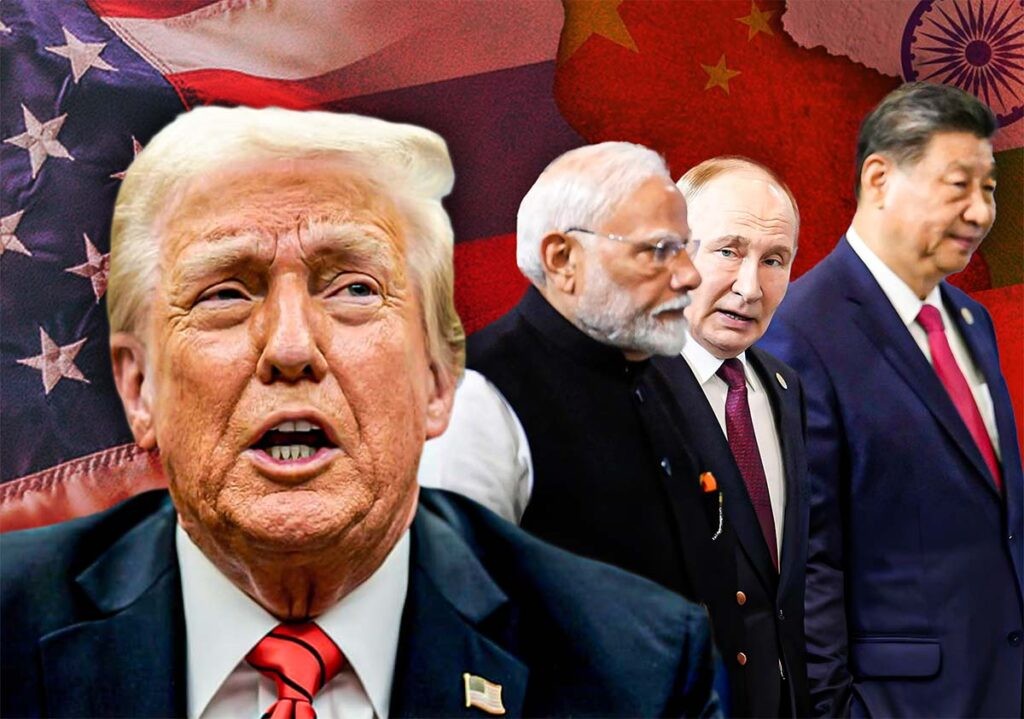
In an increasingly polarized world order, India finds itself navigating a complex geopolitical landscape shaped by the competing interests of major powers. The rise of China, the enduring influence of United States, and the historical partnership with Russia have placed India in a unique position—one that demands a careful and calculated balancing act. Rather than aligning exclusively with any one power bloc, India has chosen the path of strategic autonomy, a doctrine that allows it to pursue its national interests while maintaining flexibility in global affairs.
Historical Foundations of India’s Strategic Approach
India’s foreign policy has deep roots in the principles of non-alignment, which emerged during the Cold War era. While the Non-Aligned Movement (NAM) aimed to keep countries independent of both the American and Soviet blocs, India’s modern approach has evolved into what is now often called multi-alignment. This shift reflects the realities of a globalized world, where rigid alliances are less practical than issue-based partnerships.
India’s long-standing relationship with Russia dates back to the Soviet era, when Moscow served as a crucial ally in defense and diplomatic support. Even today, Russia remains a key supplier of military hardware, advanced defense technology, and a partner in nuclear energy cooperation. At the same time, India’s relations with the United States have grown significantly in technology, trade, education, and defense cooperation, reflecting a steady transformation from estrangement to strategic convergence.
The United States: A Strategic Partner
India’s partnership with the United States has strengthened due to shared democratic values, expanding economic interdependence, and mutual concerns about China’s growing assertiveness. Platforms like the Quadrilateral Security Dialogue (Quad) reflect cooperation in ensuring a free and open Indo-Pacific, a region that is increasingly central to global trade and security.
Key areas of cooperation include:
- Defense agreements and interoperability
- Joint military exercises such as naval drills
- Collaboration in emerging technologies (AI, space, cyber security)
- Growing ties in clean energy and critical minerals
Despite these advances, India remains cautious about over-dependence, emphasizing policy independence, strategic flexibility, and sovereign decision-making. This ensures that cooperation with the U.S. does not translate into a formal alliance structure.
Russia: A Time-Tested Ally
Despite shifting global dynamics, Russia continues to be a trusted and time-tested partner. The defense partnership remains central, with a significant share of India’s military inventory sourced from Russia. High-profile deals like the S-400 missile system highlight ongoing strategic trust and defense collaboration.
In addition, Russia plays a key role in energy security, particularly in oil supplies and nuclear power projects such as Kudankulam. Moscow has also historically supported India in international forums, including the United Nations Security Council (UNSC).
However, challenges have emerged due to Russia’s growing proximity to China and its tensions with the Western bloc. These developments require India to recalibrate its approach, ensuring that its legacy partnership with Russia remains intact without compromising its broader global engagements.
China: A Complex Rival
India’s relationship with China is perhaps the most complex and sensitive dimension of its foreign policy. While both countries are major emerging economies and engage in multilateral groupings like BRICS and the Shanghai Cooperation Organisation (SCO), their ties are overshadowed by deep-rooted strategic rivalry.
Key concerns include:
- Ongoing border disputes along the Line of Actual Control (LAC)
- Periodic military standoffs, such as the Galwan Valley clash
- China’s expanding influence in South Asia through initiatives like the Belt and Road Initiative (BRI)
- Growing Chinese presence in the Indian Ocean Region (IOR)
At the same time, strong economic interdependence, particularly in trade and supply chains, means that a complete decoupling is neither feasible nor desirable. Thus, India’s China policy combines competition, cooperation, and cautious engagement.
The Art of Multi-Alignment
India’s strategy of multi-alignment represents a pragmatic evolution of its earlier non-aligned stance. Instead of avoiding all alignments, India now engages with multiple powers simultaneously, based on issue-based convergence.
This approach allows India to:
- Collaborate with the United States on security, technology, and Indo-Pacific strategy
- Maintain strong ties with Russia in defense, energy, and strategic sectors
- Engage China economically while countering its geopolitical expansion
Such a strategy reflects pragmatism, flexibility, and a clear focus on maximizing national interest without being constrained by rigid alliances.
Challenges and Future Prospects
While strategic balancing provides flexibility, it also presents several challenges:
- Managing conflicting expectations among rival powers
- Navigating geopolitical tensions and regional conflicts
- Avoiding overdependence on any single partner
- Responding to global disruptions, including economic crises, wars, and technological competition
For instance, India’s continued defense ties with Russia sometimes create friction with the United States, while its participation in the Quad is often viewed with suspicion by China. Additionally, evolving global issues like climate change, supply chain resilience, and digital governance demand even more nuanced diplomacy.
Looking ahead, India’s growing economic strength, demographic advantage, and strategic location will enhance its role as a key global player. Its ability to maintain credible partnerships while safeguarding strategic autonomy will determine its influence in shaping the future international system.
Conclusion
India’s position between the United States, Russia, and China represents both a challenge and a significant opportunity. Through the principles of strategic autonomy and multi-alignment, India is crafting a foreign policy rooted in balance, independence, and pragmatism.
In a world defined by uncertainty, power competition, and shifting alliances, India’s ability to maintain this delicate balance will not only safeguard its national interests but also contribute to shaping a more stable and multipolar global order.