
Kangra Hill States and Their Relations with the Mughals
The Kangra Hill States, situated in the western Himalayan region of present-day Himachal Pradesh, formed an important frontier zone between the Indo-Gangetic plains and the higher Himalayas. These hill principalities developed distinct political traditions while remaining in constant interaction with larger imperial powers. From the sixteenth to the eighteenth century, their relations with the Mughal Empire significantly influenced the political, military, and cultural history of the region.
Emergence and growth of Early Medieval States
The Kangra Hill States: An Overview
- Located in the western Himalayas, mainly in present-day Himachal Pradesh
- Included states such as Kangra (Trigarta), Chamba, Kullu, Mandi, Suket, and Sirmaur
- Characterized by difficult terrain, natural defenses, and strategic mountain passes
- Ruled by hereditary dynasties, with the Katoch dynasty of Kangra being the most prominent
Strategic Importance of the Region
- Acted as a buffer zone between the Mughal heartland and the northwestern frontiers
- Controlled trade and military routes linking the Punjab plains with Tibet and Central Asia
- Kangra Valley known for its fertility and revenue potential
- Kangra Fort regarded as one of the strongest forts in northern India
Early Mughal Contacts (Babur and Humayun)
- Limited interaction due to focus on consolidation of power in the plains
- Hill rulers largely remained autonomous
- Contacts mainly diplomatic, not military
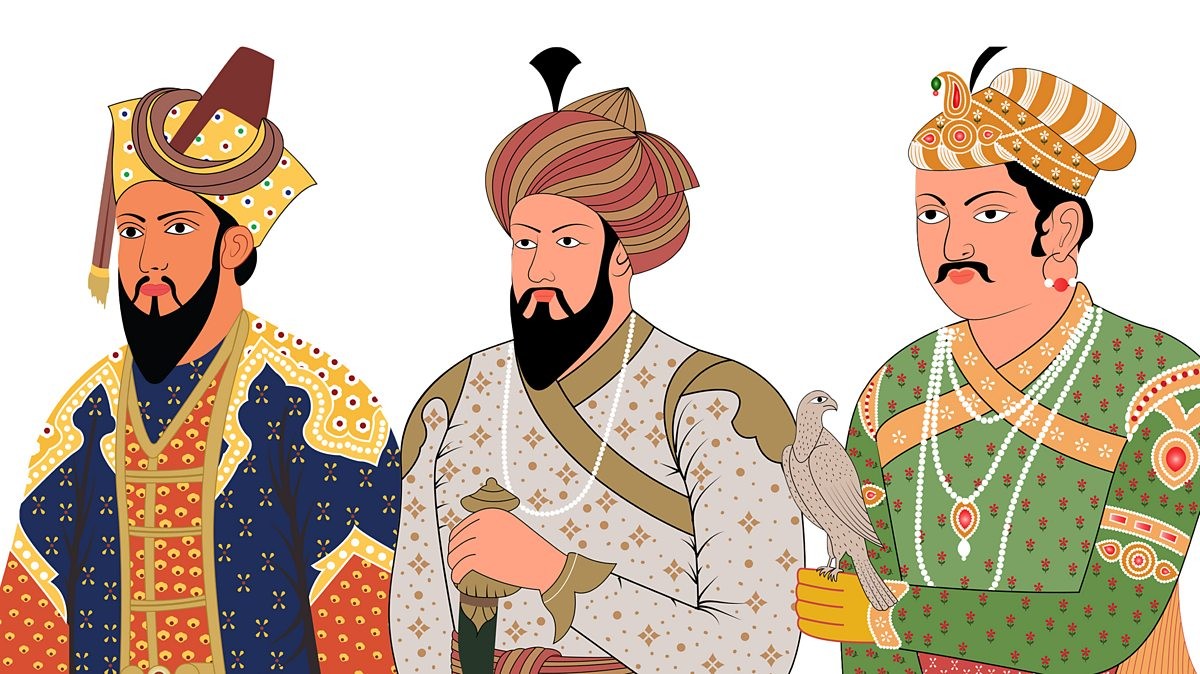
Akbar’s Policy towards the Hill States
- Policy of imperial expansion combined with conciliation
- Encouraged acceptance of Mughal suzerainty
- Granted internal autonomy in return for tribute and military support
- Bestowed mansabs on hill rulers
- Kangra Fort remained unconquered during Akbar’s reign
Mughal–Kangra Conflict and Resistance
- Katoch rulers relied on rugged terrain and strong fortifications
- Formation of local alliances among hill chiefs
- Continuous military pressure without immediate Mughal success
Conquest of Kangra under Jahangir
- Siege of Kangra Fort ended in 1620
- Internal dissensions weakened Katoch resistance
- Fort placed under a Mughal governor
- Raja reduced to subordinate status
- Considered a major imperial achievement by Jahangir
Relations with Other Kangra Hill States
- Chamba, Mandi, and Kullu maintained cordial relations
- Provided troops for Mughal campaigns
- Received territorial confirmation from the Mughal court
- Chamba benefited from imperial patronage
Cultural Impact of Mughal Relations
- Spread of Mughal court culture in hill states
- Growth of Pahari miniature painting
- Influence of Mughal artistic styles and techniques
- Development of cultural syncretism
Aurangzeb and Changing Relations
- Increased centralization and fiscal pressure
- Orthodox religious policies created resentment
- Mughal authority remained weak in remote hill regions
- Hill rulers sought greater autonomy
Decline of Mughal Control and Aftermath
- Decline of Mughal power in the early 18th century
- Hill states reasserted independence
- Rise of Raja Sansar Chand of Kangra
- Entry of new powers: Sikhs and later the British
Conclusion
The relationship between the Kangra Hill States and the Mughal Empire was shaped by geography, strategic necessity, and political pragmatism. While the Mughals established nominal control, the hill states retained substantial autonomy and a strong regional identity. Their interactions reflect the negotiated nature of imperial rule in frontier regions, marked by a balance of resistance, alliance, and adaptation.
GS-1, Unit-1, Sub Unit-3, HPAS Mains
Note: Topic important for HPAS