
Local Self-Government in India: Issues, Reforms, and the Way Forward
Local self-government is the foundation of grassroots democracy in India. It reflects the idea that governance should not remain confined to the Union and State levels but must reach the villages, towns, and cities where citizens live and work. The constitutional vision of decentralization was realized through the 73rd and 74th Constitutional Amendments, which gave constitutional status to rural and urban local bodies. Today, institutions like the Panchayati Raj Institutions and Urban Local Bodies form the third tier of governance, playing a crucial role in development, service delivery, and participatory democracy.
However, despite significant progress, local self-government in India continues to face structural, financial, and administrative challenges. Understanding these issues and exploring reforms is essential for strengthening democratic decentralization in the country.
Constitutional Framework of Local Governance
The enactment of the 73rd Constitutional Amendment Act and the 74th Constitutional Amendment Act marked a turning point in India’s democratic evolution. These amendments:
- Granted constitutional status to Panchayats and Municipalities.
- Mandated regular elections every five years.
- Provided for reservation of seats for Scheduled Castes, Scheduled Tribes, and at least one-third reservation for women (now 50% in many states).
- Established State Finance Commissions for financial devolution.
- Introduced the Eleventh and Twelfth Schedules, listing subjects for rural and urban local bodies respectively.
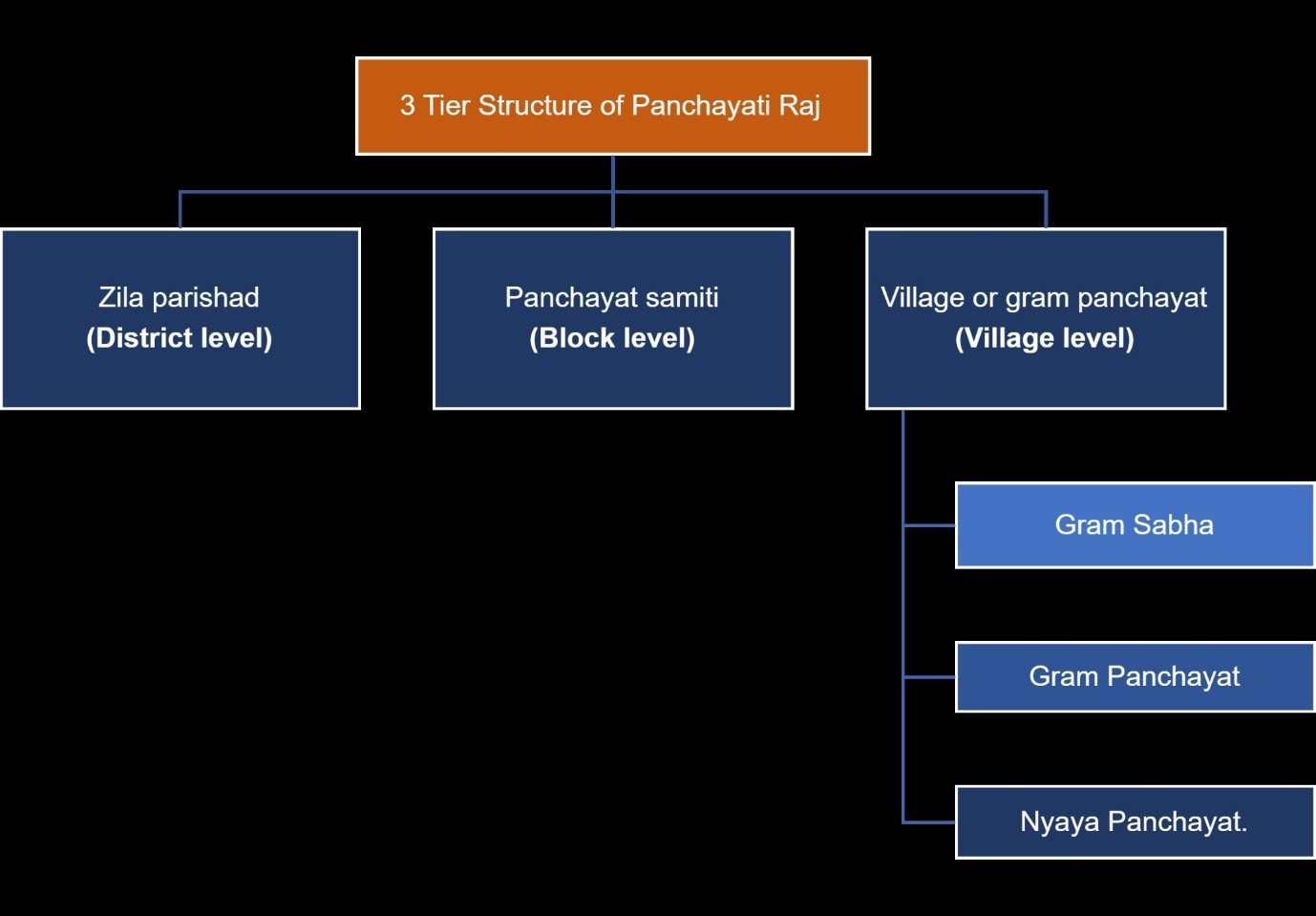
In rural areas, the Panchayati Raj system follows a three-tier structure: Gram Panchayat at the village level, Panchayat Samiti at the intermediate level, and Zila Parishad at the district level. In urban areas, governance is managed through Municipal Corporations, Municipal Councils, and Nagar Panchayats, depending on population size.
Key Issues Facing Local Self-Government
- Inadequate Financial Autonomy
One of the most pressing challenges is the lack of financial independence. Although local bodies are empowered to levy certain taxes, their revenue base remains weak. Many depend heavily on grants-in-aid from state governments. Delays in fund transfers and tied grants limit their autonomy in planning and execution.
Urban local bodies, especially in smaller towns, struggle with poor tax collection efficiency and limited revenue from property taxes. Rural Panchayats often lack the capacity to mobilize local resources effectively.
- Administrative Constraints
Despite constitutional backing, real power often remains concentrated at the state level. Bureaucratic control and overlapping responsibilities reduce the autonomy of elected representatives. In urban areas, the role of the Municipal Commissioner (appointed by the state government) frequently overshadows that of the elected Mayor, raising concerns about democratic accountability.
Moreover, many local bodies lack trained personnel, technical expertise, and adequate staff. This hampers effective implementation of development schemes.
- Incomplete Devolution of Powers
The Constitution provides a list of subjects for local bodies, but actual transfer of functions, funds, and functionaries (the “3Fs”) varies across states. In several states, key sectors like health, education, and water supply remain under state control, limiting the scope of local governance.
- Political Interference and Irregularities
Political interference in decision-making processes, delays in conducting elections, and frequent supersession of local bodies weaken the spirit of decentralization. Though State Election Commissions are mandated to conduct timely elections, delays still occur in some regions.
- Capacity and Awareness Gaps
While reservation policies have increased representation of women and marginalized communities, many elected representatives lack adequate training and awareness about administrative procedures, budgeting, and governance processes. Capacity building remains insufficient and inconsistent.
Recent Reforms and Initiatives
Recognizing these challenges, several reforms have been introduced:
- Increased financial allocations through Finance Commission grants.
- Introduction of e-governance platforms for transparency and efficiency.
- Capacity-building programs for elected representatives.
- Performance-based grants to incentivize better governance.
- Promotion of participatory planning through Gram Sabhas and ward committees.
The focus on digital governance, especially in urban areas, has improved service delivery in property tax collection, birth and death registration, and grievance redressal systems.
The Way Forward
To strengthen local self-government in India, a comprehensive reform strategy is essential.
- Genuine Fiscal Empowerment
States must ensure predictable and adequate financial transfers to local bodies. Expanding their taxation powers and improving revenue collection systems—especially property tax reforms in urban areas—can enhance fiscal autonomy.
- Full Devolution of the 3Fs
True decentralization requires the effective transfer of functions, funds, and functionaries. States should clearly define roles and avoid overlapping responsibilities to ensure accountability.
- Strengthening Capacity Building
Regular training programs, digital literacy initiatives, and leadership development workshops should be institutionalized. Empowered representatives are essential for responsive governance.
- Promoting Participatory Democracy
Gram Sabhas and ward committees should be strengthened to encourage citizen participation. Social audits and transparency mechanisms can increase accountability and reduce corruption.
- Institutional Reforms in Urban Governance
Clearer demarcation of powers between Mayors and Municipal Commissioners can improve democratic accountability. Strengthening metropolitan planning committees is also crucial in rapidly urbanizing regions.
- Leveraging Technology
Digital platforms for budgeting, monitoring, and public grievance systems can enhance efficiency and transparency. Smart governance tools should not be limited to metropolitan cities but extended to smaller towns and rural areas.
Conclusion
Local self-government in India represents the realization of democratic decentralization and participatory governance. The constitutional vision behind the 73rd and 74th Amendments was to empower citizens at the grassroots level and make governance more responsive and accountable.
While significant progress has been made in institutionalizing Panchayati Raj Institutions and Urban Local Bodies, persistent challenges—especially in financial autonomy, administrative control, and capacity building—limit their full potential. The future of Indian democracy depends not only on strong national and state institutions but also on vibrant and empowered local governments.
Strengthening local self-government is not merely an administrative reform; it is a democratic imperative. By ensuring genuine devolution of power, improving financial independence, and fostering citizen participation, India can truly achieve governance “of the people, by the people, and for the people” at the grassroots level.
Note: Topic important for UPSC IAS, HPAS, State PCS