
Introduction
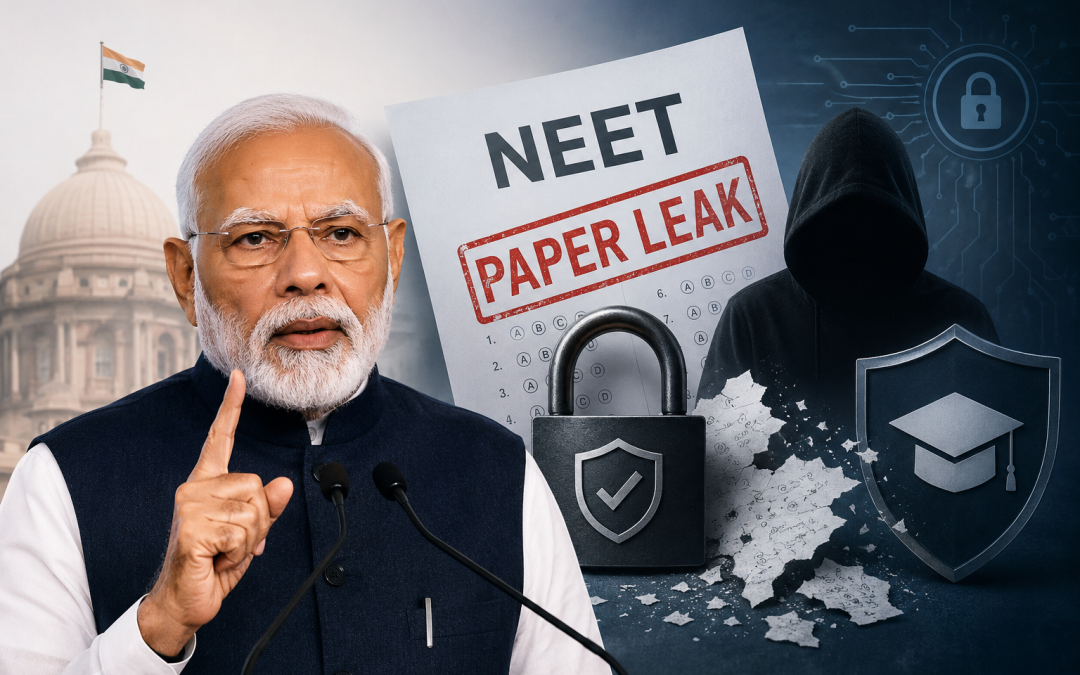
The alleged NEET-UG 2026 paper leak has become one of the biggest education controversies in recent years, raising serious concerns about the integrity of India’s competitive examination system. Addressing members of the NDA Parliamentary Party ahead of the Monsoon Session of Parliament, Prime Minister Narendra Modi described the paper leak as a “grave sin” (ghor paap) and emphasized that those responsible would face the strictest possible punishment. He also called on political parties to treat the issue as a national concern rather than a partisan one.
The controversy has reignited debate over exam security, transparency, student welfare, and the future of high-stakes entrance examinations in India.
What Happened?
NEET (National Eligibility cum Entrance Test) is India’s largest medical entrance examination, conducted annually by the National Testing Agency (NTA). It serves as the gateway for admission to MBBS, BDS, AYUSH, and several other medical courses.
In May 2026, allegations surfaced that confidential NEET question papers had been leaked before the examination. Following a complaint from the Ministry of Education, the Central Bureau of Investigation (CBI) registered an FIR and launched a nationwide investigation.
According to CBI findings:
- Investigators identified alleged insiders connected with the examination process.
- Multiple arrests were made, including individuals accused of leaking Chemistry and Biology questions.
- The investigation suggested that certain candidates received advance access to questions through unauthorized coaching sessions.
The investigation is ongoing.
PM Modi’s Statement
During the NDA Parliamentary Party meeting, Prime Minister Narendra Modi said:
- The NEET paper leak is a “grave sin.”
- Those responsible must receive the strictest punishment.
- Protecting the future of India’s youth is a national responsibility.
- Political parties should avoid turning the issue into partisan politics.
- Both the Union Government and state governments must work together to prevent such incidents in the future.
The remarks came amid widespread public concern and discussions in Parliament.
Why Exam Security Matters in India
India conducts some of the world’s largest competitive examinations.
Every year:
- Millions of students appear for NEET.
- Students spend years preparing.
- Families invest significant financial resources in coaching and education.
- Careers often depend on a single examination.
Because of this, maintaining examination integrity is essential.
If students believe exams are unfair, confidence in the entire education system can decline.
Strong examination security protects:
- Equal opportunity
- Merit-based selection
- Public trust
- Institutional credibility
- National talent development
Impact on Students
- Mental Stress
Preparing for competitive examinations requires years of dedication.
When paper leak allegations emerge, many students experience:
- Anxiety
- Uncertainty
- Frustration
- Loss of motivation
Even candidates who performed well may worry about the validity of their results.
- Financial Burden
Many families invest heavily in:
- Coaching institutes
- Study materials
- Hostel expenses
- Travel
- Examination fees
If examinations are cancelled or repeated, the financial burden increases.
- Loss of Trust
Students expect examinations to reward merit.
Repeated paper leak incidents can reduce confidence in:
- Examination agencies
- Recruitment systems
- Government institutions
Restoring public trust requires transparent investigations and visible accountability.
- Delay in Admissions
Exam controversies often affect:
- Result declarations
- Counselling schedules
- College admissions
- Academic calendars
These delays can impact students’ educational and career plans.
Impact on Competitive Exams in India
The issue extends beyond NEET.
India has witnessed paper leak allegations in several recruitment and entrance examinations over the years.
Common consequences include:
- Court cases
- Re-examinations
- Administrative delays
- Increased security costs
- Public protests
Such incidents highlight the need for stronger examination systems across sectors.
Possible Reforms
Experts and policymakers have proposed several measures to strengthen examination security.
- Stronger Digital Security
Question papers should be protected using:
- Advanced encryption
- Secure digital transmission
- Multi-factor authentication
- Real-time monitoring
- Limited Human Access
Access to confidential examination materials should be restricted to a small number of authorized personnel, with detailed audit logs.
- AI-Based Monitoring
Artificial intelligence can help detect:
- Unusual candidate behaviour
- Suspicious communication
- Organized cheating patterns
- Cybersecurity threats
- Strict Legal Action
The Public Examinations (Prevention of Unfair Means) Act, 2024 provides a legal framework to tackle organized cheating and paper leaks. Effective enforcement can act as a deterrent.
- Better Coordination Between Agencies
Successful exam security requires coordination among:
- National Testing Agency (NTA)
- Ministry of Education
- State police
- Cybercrime units
- Central Bureau of Investigation (CBI)
- Whistleblower Mechanisms
Secure reporting channels can encourage individuals to report suspicious activities before examinations are compromised.
The Way Forward
The NEET paper leak controversy has highlighted the importance of safeguarding India’s examination system.
While investigations continue, restoring public confidence will depend on:
- Transparent investigations
- Swift legal action against offenders
- Stronger technological safeguards
- Better institutional accountability
- Consistent implementation of security reforms
Ensuring fair and secure examinations is essential for protecting merit and maintaining trust among millions of students.
Conclusion
Prime Minister Narendra Modi’s description of the NEET paper leak as a “grave sin” reflects the seriousness with which the issue is being viewed at the national level. Alongside the ongoing CBI investigation and parliamentary discussions, the incident has renewed calls for comprehensive reforms in examination security.
For India’s education system, the central challenge is not only identifying those responsible but also building processes that prevent similar incidents in the future. A credible examination system remains fundamental to ensuring equal opportunity, rewarding merit, and preserving the aspirations of millions of students.