
The Rise of Solar Power in Himachal Pradesh
GS-1, Unit-2, Sub Unit-3, HPAS Mains
Himachal Pradesh, traditionally known as the “Hydro Power State,” is strategically shifting its focus towards solar energy to diversify its power sources, enhance energy security, and lead the way toward a sustainable future. The ambitious goal of becoming the first ‘Green Energy State’ by 2026 highlights this significant policy change.
Solar Potential and Current Status
Himachal Pradesh has a vast, untapped solar energy potential. The National Institute of Solar Energy (NISE) estimates this potential to be as high as 34 GW, while the Indian Renewable Energy Development Agency (IREDA) suggests an even greater potential of around 53 GW. The state is actively working to harness this potential with a number of projects already in place or in the pipeline.
- Growing Installed Capacity: The state’s installed solar capacity is increasing steadily, with approximately 62 MW of ground-mounted solar projects operational in the private sector and an additional 32 MW in the public sector.
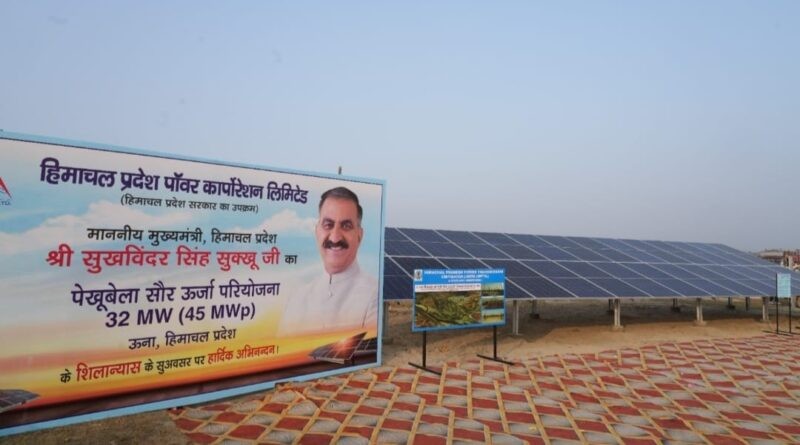
- Commissioned Projects: Key projects include a 750-kilowatt solar plant in Dharamshala, and the 32 MW Pekhubela project in Una, which has already generated over 34 million units. The 5 MW Bhanjal project (Una) is now operational, and the 10 MW Aghlor (Una) project is nearing completion.
- Projects in Pipeline: The state is evaluating tenders for seven solar projects totalling 72 MW. Additionally, surveys are underway for eight more projects with a combined capacity of 325 MW, including a major 200 MW project in Kangra district spanning over 1,000 acres.
- Decentralized Solar Focus: There is a strong emphasis on decentralized solutions, including rooftop solar for various buildings. The Cabinet also approved the signing of a Memorandum of Understanding (MoU) between HIMURJA and selected Gram Panchayats for the installation of 500 KW solar power plants in 100 panchayats under the Green Panchayat Scheme.
Significance of Solar Energy for Himachal Pradesh
The shift to solar power offers several key advantages for the state:
- Diversifying the Energy Mix: Reducing the over-reliance on hydropower, which can be vulnerable to climate-induced changes, makes the state’s energy supply more resilient and less dependent on external sources during the winter months.
- Decentralized Energy Solutions: Solar power can provide electricity to remote, unelectrified villages where extending the traditional power grid is challenging and costly.
- Reduced Transmission Losses: Generating power closer to where it’s consumed, especially through rooftop installations, minimizes energy loss during transmission and distribution, improving overall efficiency.
- Environmental Sustainability: Solar power is a clean, renewable energy source that produces no greenhouse gas emissions, directly supporting Himachal’s commitment to preserving its pristine environment and combating climate change.
- Economic Opportunities: The growth of the solar sector creates new jobs in manufacturing, installation, and maintenance, generating revenue for the state and providing income for local youth.
Government Initiatives
The Himachal Pradesh government, often through agencies like HIMURJA, has launched several initiatives to promote solar energy:
- Ambitious Green Energy Target: The state is working towards becoming a ‘Green Energy State’ by 2026 by harnessing green energy and significantly reducing carbon emissions.
- “Come and Install Solar Power Projects” Initiative: This initiative, launched by Chief Minister Sukhvinder Singh Sukhu, invites private sector participation by streamlining administrative and approval processes.
- Revised Policies and Tariffs: The Himachal Pradesh Electricity Regulatory Commission (HPERC) has revised solar PV tariffs and introduced Green Energy Open Access and Banking Regulations to facilitate power exchange and grid connectivity.
- Subsidies and Financial Incentives: The state provides various incentives, including interest subsidies, and promotes the central PM-Surya Ghar: Muft Bijli Yojana, which offers substantial subsidies for residential rooftop solar systems (up to ₹78,000 for systems above 3 kW).
- Solarisation of Public Facilities: There is a strong push to install solar panels on government buildings, water supply schemes, and irrigation projects to meet their energy needs with clean power.
Challenges
Despite the promising outlook, scaling up solar power in Himachal Pradesh faces unique challenges:
- Topographical Constraints: The rugged, mountainous terrain makes it difficult to find large, flat land parcels for utility-scale solar farms.
- Dust and Snow: Accumulation of dust and heavy snowfall, especially at higher altitudes, significantly reduces the efficiency of solar panels.
- Grid Integration: Integrating a growing number of intermittent, decentralized solar projects requires modernization of the grid using smart technologies.
- High Initial Cost: Despite government subsidies, the upfront cost remains a barrier for many households and small businesses.
- Awareness and Skills: There is a need for greater public awareness about solar benefits and the development of a skilled local workforce for installation, operation, and maintenance.
Way Forward
To overcome these challenges, Himachal Pradesh needs to:
- Prioritize innovative and decentralized solutions like rooftop solar and micro-grids.
- Continuously strengthen policy and regulatory frameworks to simplify processes and offer attractive incentives.
- Invest in research and development for hill-specific technologies that can withstand unique climatic conditions.
- Enhance financial mechanisms by exploring green financing and public-private partnership models.
- Launch widespread awareness campaigns and vocational training programs to create a skilled local workforce.
By addressing these challenges and continuing its strategic efforts, Himachal Pradesh is well on its way to becoming a leader in clean energy, ensuring both its energy independence and environmental sustainability. The state’s future is looking increasingly bright, powered by the sun.