
GS-2, Sub Unit-3, HPAS Mains
The Enduring Role of Caste in Himachal Politics
Role of Caste in Himachal Politics, often romanticized as a pristine hill state with a relatively egalitarian society, is commonly perceived to be less affected by overt caste politics compared to its plain’s counterparts. However, a deeper analysis reveals that caste, while operating subtly, plays a crucial and undeniable role in shaping the state’s political landscape. From candidate selection and electoral strategies to power distribution and social movements, caste dynamics are intricately woven into the fabric of Himachali polity. This topic is particularly relevant for aspirants preparing for HPAS and UPSC exams, and is regularly covered at Nimbus IAS Academy, known as the best civil services coaching in Chandigarh.
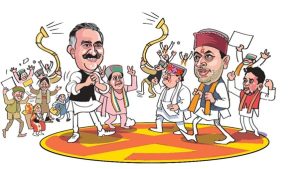
Here are the key points discussing the role of caste in Himachal’s polity:
· Overwhelming Dominance of Upper Castes (Rajputs and Brahmins): These two communities collectively form the demographic backbone and consequently hold immense political sway in Himachal Pradesh.
o Example: Rajputs constitute approximately 32.7% and Brahmins around 18% of the state’s total population, collectively making up over 50.7%. This demographic strength directly translates into political power, evident in the fact that historically, all seven Chief Ministers of Himachal Pradesh have been from these two communities: Six have been Rajputs (Y.S. Parmar, Ram Lal Thakur, Virbhadra Singh, Prem Kumar Dhumal, Jai Ram Thakur, and Sukhvinder Singh Sukhu), and Shanta Kumar has been the sole Brahmin Chief Minister. Brahmins, while fewer in numbers than Rajputs, often act as crucial “kingmakers,” influencing outcomes in several constituencies and within party high commands due to their social standing and organizational capacity.
· Strategic Ticket Distribution by Parties: Both the Congress and BJP meticulously factor in caste equations while distributing tickets for assembly and parliamentary elections, aiming to maximize caste-based votes alongside other considerations.
o Example: In the 2022 Assembly elections, both major parties strategically fielded a substantial number of Rajput candidates (reportedly around 28 each) to secure dominant community votes. Similarly, in regions with significant Brahmin populations, their candidates are often preferred, demonstrating a clear caste calculation in ticket allocations.
· Crucial Role of OBCs, especially in Kangra, as Vote-Swingers: Other Backward Classes (OBCs) form a significant segment of the population and are pivotal in determining electoral outcomes, particularly in key districts.
o Example: OBCs constitute approximately 13-15% of the total state population, and more than 55% of Himachal’s OBC population resides in Kangra district alone. This demographic concentration makes Kangra a political kingmaker, as the saying goes, “the Road to Shimla goes through Kangra.” The consolidated OBC vote can decisively tilt the scales in numerous constituencies, making them a primary focus for political parties’ outreach and promises.
· Caste-Based Appeals and Influence of Nominated Candidates: Political parties not only craft policies but also make direct appeals for votes based on the caste identity of their nominated candidates, particularly at the constituency level.
o Example: Candidates, especially in their local constituencies, actively seek votes by highlighting their own caste affiliation, often implicitly or explicitly appealing to the sentiment of “our community’s candidate.” Studies have shown that a significant percentage of voters in Himachal Pradesh indicate a preference for voting for candidates from their own caste, and a majority observe that people in their area generally vote along caste lines, demonstrating the tangible impact of a candidate’s caste on local electoral outcomes.
· Influence of Caste-Based Policies: Parties often tailor their policy promises and government schemes to appeal to specific caste groups to consolidate vote banks and address perceived disparities.
o Example: The long-standing demand for Scheduled Tribe (ST) status for the Hattee community in Sirmaur (recently granted but currently sub judice) is a prime example. Parties align with or oppose such demands based on their potential electoral impact on various caste groups, including SCs and OBCs who might fear dilution of their existing benefits.
· Ensured Representation via Reserved Constituencies: Himachal Pradesh has dedicated electoral seats for Scheduled Castes (SCs) and Scheduled Tribes (STs) to ensure their political voice, and their collective vote holds sway beyond these seats.
o Example: With SCs comprising approximately 25% of the population (and 17 Assembly constituencies reserved for them), and STs (with 3 reserved seats), candidates in general seats cannot afford to ignore these segments. These reserved seats become crucial battlegrounds where parties compete to win the support of these constitutionally protected communities.
· Undercurrent of Caste-Based Demands: Though not leading to overt caste-based political parties, various caste groups periodically mobilize to assert their interests or demand specific policies.
o Example: The demand for a ‘Swarna Aayog’ (Commission for the General Category) by upper castes, and counter-movements from other communities, illustrate how different caste groups are active in advocating for their share in government benefits and representation, creating a complex web of caste-based political pressures.
Conclusion:
In essence, while Himachal Pradesh may not exhibit the same overt caste-based political mobilization as some other states, caste undeniably remains a crucial, albeit often understated, factor in its polity. The numerical strength and historical dominance of upper castes, the strategic importance of OBCs (especially their concentration in politically vital Kangra), the constitutionally mandated representation of SCs and STs, and the calculated use of caste-based policies and direct appeals all ensure that caste is meticulously factored into election outcomes, government formation, and policy decisions. This intricate interplay of caste identities continues to significantly shape the political landscape of the ‘Dev Bhoomi’.