
Beyond the State: Civil Society, NGOs and SHGs in India’s Governance Framework
Governance in modern democracies is no longer confined to the formal machinery of the State. In a vast, diverse and socio-economically complex country like India, governance extends beyond ministries, legislatures and bureaucracies. It increasingly involves civil society institutions, Non-Governmental Organizations (NGOs), and Self-Help Groups (SHGs) that bridge the gap between policy formulation and grassroots realities. Together, they represent the “third sector” — operating between the State and the market — and play a crucial role in deepening democracy, promoting accountability, and ensuring inclusive development.
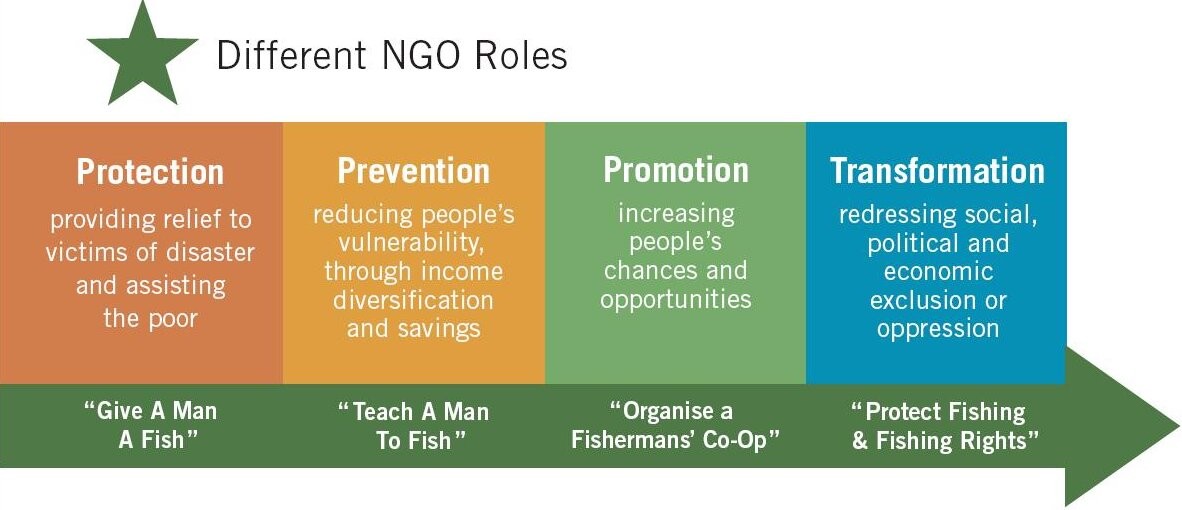
The Concept of Civil Society in Governance
Civil society refers to the arena of voluntary associations, community groups, social movements, professional bodies and NGOs that function independently of the government. In India, civil society has historically shaped public life — from the freedom struggle to contemporary rights-based movements. It functions as a mediator between citizens and the State, amplifying marginalized voices and ensuring that governance is not merely top-down but participatory.
The constitutional foundation for civil society engagement lies in Article 19, which guarantees freedom of speech, association and expression. Moreover, the 73rd and 74th Constitutional Amendments strengthened local self-governance, creating space for community participation in Panchayati Raj Institutions and Urban Local Bodies. In this decentralized framework, civil society actors contribute to planning, implementation and monitoring of developmental schemes.
NGOs as Development Partners and Watchdogs
Non-Governmental Organizations (NGOs) have emerged as key stakeholders in India’s governance ecosystem. They operate across sectors such as education, health, environment, women’s empowerment, child rights and rural development. Unlike government agencies, NGOs often possess flexibility, grassroots presence and community trust, enabling them to innovate and tailor interventions to local needs.
For instance, organizations like Self Employed Women’s Association (SEWA) have empowered women in the informal sector through collective organization, microfinance and capacity building. SEWA’s work demonstrates how civil society initiatives can influence public policy on labour rights and social security. Similarly, PRADAN has worked extensively in rural livelihoods, partnering with state governments to implement poverty alleviation programs.
NGOs also perform a watchdog function, holding the government accountable through social audits, research, advocacy and public campaigns. A notable example is Mazdoor Kisan Shakti Sangathan (MKSS), which played a pivotal role in the movement that led to the enactment of the Right to Information Act, 2005. Through public hearings (Jan Sunwais), MKSS demonstrated how community participation can uncover corruption and improve transparency in public expenditure.
Thus, NGOs act both as collaborators and critics — strengthening governance through partnership while ensuring accountability through advocacy.
Self-Help Groups: Grassroots Engines of Participatory Governance
Self-Help Groups (SHGs) represent one of the most transformative grassroots movements in India. Typically consisting of 10–20 members, primarily women, SHGs focus on savings, credit, livelihood promotion and social empowerment. Over time, they have evolved into instruments of community mobilization and participatory governance.
The SHG movement gained momentum with initiatives like National Bank for Agriculture and Rural Development (NABARD)’s SHG–Bank Linkage Programme. By facilitating financial inclusion, SHGs have reduced dependence on informal moneylenders and enhanced economic self-reliance among rural women.
Beyond financial inclusion, SHGs contribute to governance in multiple ways:
- Local Decision-Making: SHG members actively participate in Gram Sabhas, influencing village development plans.
- Implementation Support: They assist in implementing schemes such as the National Rural Livelihoods Mission (NRLM).
- Social Monitoring: SHGs often monitor delivery of public services like mid-day meals, PDS distribution and sanitation drives.
- Women’s Political Empowerment: SHGs act as training grounds for leadership, encouraging women to contest Panchayat elections.
By fostering collective agency and social capital, SHGs deepen grassroots democracy and strengthen bottom-up governance.
Civil Society and Policy Influence
Civil society organizations have significantly shaped India’s rights-based welfare framework. Campaigns led by networks of activists and NGOs contributed to legislations such as the Right to Information Act, the Mahatma Gandhi National Rural Employment Guarantee Act (MGNREGA), and the National Food Security Act. These laws institutionalized transparency, employment guarantees and food entitlements, respectively.
The interaction between civil society and the State often takes the form of consultation, public interest litigation, policy research and collaborative implementation. This participatory model aligns with the concept of “good governance,” which emphasizes transparency, accountability, inclusiveness and responsiveness.
Challenges in the Civil Society–State Relationship
Despite their contributions, NGOs and civil society organizations face several challenges. Regulatory frameworks such as the Foreign Contribution (Regulation) Act (FCRA) have tightened oversight over foreign funding. While regulation aims to ensure transparency and national security, critics argue that excessive restrictions may constrain legitimate civil society activity.
Additionally, issues of accountability within NGOs themselves — such as lack of transparency, donor dependency, and uneven capacity — sometimes undermine credibility. There is also the risk of politicization, where civil society actors may align too closely with partisan interests.
For SHGs, challenges include limited managerial capacity, inadequate market access, and overburdening with administrative responsibilities without sufficient support.
Toward Collaborative Governance
The future of governance in India lies in collaborative partnerships between the State, civil society and community institutions. Rather than viewing NGOs and SHGs as parallel or oppositional entities, governments increasingly recognize them as development partners. Public–private–community partnerships in sectors such as health, sanitation, and rural livelihoods illustrate this evolving synergy.
Digital governance initiatives have further expanded opportunities for collaboration. Civil society groups assist in digital literacy campaigns, grievance redressal mechanisms, and awareness generation regarding government schemes.
Ultimately, effective governance in India requires a multi-stakeholder approach where policy formulation is informed by grassroots realities, and implementation is supported by community participation.
Conclusion
India’s governance framework extends far beyond the formal apparatus of the State. Civil society organizations, NGOs, and SHGs have become indispensable actors in promoting inclusive development, transparency and participatory democracy. They bridge the gap between policy and people, amplify marginalized voices, and nurture grassroots leadership.
While regulatory and operational challenges persist, the collaborative engagement of the State with civil society holds immense potential. In a country as diverse and populous as India, governance cannot be centralized alone — it must be co-created. The journey toward good governance, therefore, lies not only in strengthening state institutions but also in empowering citizens and their collective organizations to actively shape the democratic process.
Note: Topic important for UPSC Civil Services, HPAS, State PCS