
Role of Women in the Politics of Himachal Pradesh
GS-2, Unit-2, Sub Unit-3, HPAS Mains
Himachal Pradesh, often hailed as the “Dev Bhoomi” (Land of the Gods), has not only been a land of cultural and natural richness but also a place where women have played a distinct role in shaping its socio-political narrative. Though the political landscape of the state has been dominated largely by male leaders, women’s participation in politics has been steadily growing, leaving behind a legacy of resilience, empowerment, and leadership.
Historical Context
The history of women’s political participation in Himachal Pradesh can be traced back to the Praja Mandal movements during the freedom struggle. Women joined rallies, voiced their opinions, and contributed to anti-colonial efforts. After independence and the formation of Himachal Pradesh in 1948, women began to step into mainstream politics, though initially in smaller numbers.
Women in Legislative Politics
Since 1967, about 40 women have been elected to the Himachal Pradesh Legislative Assembly. The highest number of women MLAs in a single election was six in 1998, but in many elections, the figure has dropped to three or fewer. In the 2022 Assembly elections, 24 women candidates contested out of 412, but only one woman was elected to the 68-member Assembly.
At the parliamentary level, Himachal Pradesh has elected only four women to the Lok Sabha in the last 72 years and eight women to the Rajya Sabha. The state has never had a woman Chief minister.
Prominent leaders like Vidya Stokes, Lata Thakur (the first woman legislator from a Scheduled Tribe constituency in Lahaul-Spiti), and Dr. Bimla Kashyap stand out in this journey, but overall representation remains very low.
Role in Local Governance
One of the most transformative spaces for women’s political participation in Himachal Pradesh has been at the Panchayati raj level. Following the 73rd Constitutional Amendment, one-third of seats in panchayats were reserved for women, later increased to 50% in Himachal in 2008. This has enabled thousands of women to serve as Pradhans, sarpanches, and zila parishad members, shaping development at the grassroots level.
Women leaders in rural areas have brought focus on sanitation, drinking water, education, and livelihood generation through self-help groups. Their entry has helped challenge traditional gender roles, creating a pathway for greater participation in higher politics.
Significance of Women in Politics
- Inclusive Representation – Women constitute nearly half the population; their presence ensures that policies reflect the needs of all citizens.
- Focus on Social Issues – Women leaders often prioritize education, health, water, sanitation, and welfare schemes, improving grassroots development.
- Strengthening Democracy – Active participation of women deepens democratic values by making governance more participatory and balanced.
- Role Models for Society – Women in politics inspire younger generations to break stereotypes and join public life.
- Improved Governance – Studies show that women leaders are more transparent, accountable, and people-oriented in their decision-making.
Women as Voters: A Silent Revolution
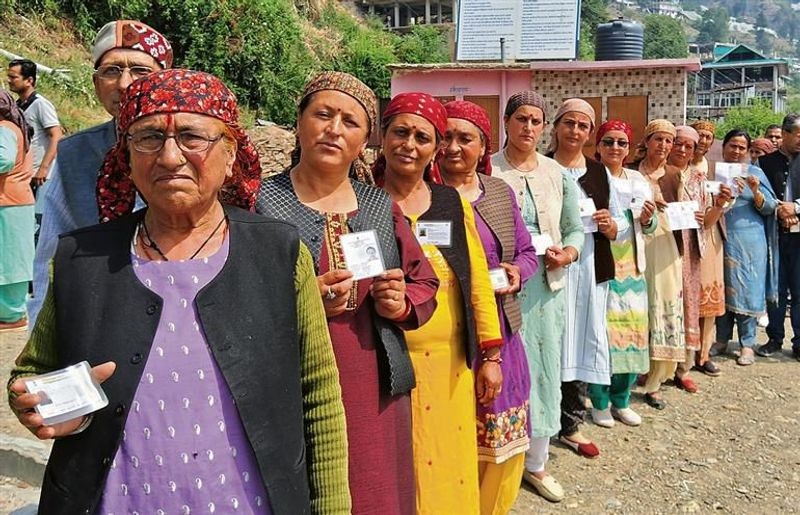
While representation is low, women in Himachal Pradesh have made their mark as decisive voters.
- In the 2022 Assembly elections, 76.8% of women voters cast their ballots compared to 72.4% of men.
- In 42 out of 68 constituencies, women voters outnumbered men.
- Women form nearly 49.5% of the state’s electorate, making them a crucial political force.
This trend has compelled political parties to focus on women-centric issues like healthcare, self-employment, safety, and social security in their manifestos.
Challenges Faced by Women in Politics
- Low Representation – Despite forming nearly half of the electorate, women rarely cross 3–4 seats in the Himachal Assembly; in 2022, only one woman was elected out of 68 MLAs.
- Patriarchal Mindset – Politics continues to be male-dominated; women are often seen as symbolic candidates rather than serious contenders.
- Family-Based Entry – Many women enter politics through political families, limiting opportunities for women without dynastic backgrounds.
- Limited Access to Resources – Lack of financial backing, political networks, and media visibility reduces their chances of contesting successfully.
- Double Burden of Roles – Women juggle between household responsibilities and political commitments, which discourages many from active participation.
- Tokenism in Parties – Political parties often field women candidates in constituencies with weak chances of winning, leading to low success rates.
- Safety and Social Barriers – Harassment, gender bias, and social stereotypes act as deterrents for women aspiring to enter public life.
The Road Ahead
- Ensure Greater Representation – Implement women’s reservation in Assemblies and Parliament to guarantee fair political participation.
- Political Party Reforms – Parties should field more women in winnable seats rather than symbolic constituencies.
- Leadership Training – Provide capacity-building and mentorship programs for women at the grassroots and state level.
- Encourage Youth Entry – Create opportunities for young women through student politics, awareness campaigns, and internships in governance.
- Economic & Social Support – Strengthen women’s economic independence and provide institutional support (like child care, safety measures) to ease their political journey.
- Breaking family monopoly by opening doors to women from diverse social and economic backgrounds.
Conclusion
Women in Himachal Pradesh have come a long way from being passive participants in politics to becoming active leaders in local governance and decisive voters in state elections. Yet, their representation in legislative politics remains dismally low. The contrast between high voter turnout, strong workforce participation, and weak legislative presence reflects deeper structural barriers.
If Himachal Pradesh can align women’s representation with their active participation, it can set a powerful example of gender-inclusive politics, not just for hill states but for all of India.