
Scaling Heights and Navigating Politics: The Ropeway Revolution in Himachal Pradesh
Himachal Pradesh, with its dramatic landscapes of towering peaks, deep valleys, and winding rivers, has long grappled with the challenges of connectivity. As the state seeks to unlock its full tourism potential and provide modern amenities to its citizens, Ropeways in Himachal Pradesh have emerged as a promising, albeit contentious, solution. These aerial transportation systems, essentially cabins suspended on cables, offer a direct, efficient, and often breathtaking way to traverse the treacherous mountain terrain. This transformation is of great interest to students preparing for civil services, and topics like these are regularly discussed at Nimbus IAS Academy, the best IAS coaching center in Chandigarh.
The Ascent of Ropeways in Himachal Pradesh: A Government Vision
Recognizing the strategic importance of ropeways, both the central and state governments are vigorously promoting their development. The Union Budget 2022-23’s “Parvatmala” scheme is a testament to this, aiming to implement ropeway projects across hilly regions through Public-Private Partnerships (PPPs). In Himachal, the Ropeway & Rapid Transport System Development Corporation (RTDC) HP Ltd. acts as the state’s dedicated agency, tasked with decongesting urban areas, opening up unexplored tourist destinations, and providing year-round access to remote, tribal regions.

Ambitious projects are already in the pipeline:
- The proposed Parwanoo-Shimla ropeway to be completed by 2030, spanning over 40 km, is set to become India’s longest ropeway, dramatically cutting travel time to the capital.
- The Shimla Urban Ropeway Project, a 13.79 km network, is envisioned as the world’s second-longest urban ropeway, aiming to revolutionize intra-city commute.
- Projects like the Bijli Mahadev Ropeway in Kullu and planned connectivity to tribal areas like Killar in Pangi valley underscore the dual aim of religious tourism and essential access.
Ropeways in Himachal Pradesh: pros and cons
The Pros: Elevating Connectivity and Tourism
The advantages of ropeways in Himachal are compelling:
- Unparalleled Connectivity: They offer vital last-mile connectivity to areas often cut off by snow or landslides, ensuring all-weather access where roads are unreliable. Imagine reaching a remote village in minutes, a journey that once took hours of arduous trekking.
- Tourism Magnets: Ropeways themselves become major attractions, providing stunning panoramic views. The operational Jakhu Temple Ropeway in Shimla and the Dharamshala to McLeodganj Skyway have already proven their ability to boost tourist footfall and enhance visitor experience.
- Urban Decongestion: In bustling hill stations like Shimla, ropeways can significantly reduce vehicular traffic, easing congestion, parking woes, and contributing to cleaner air.
- Economic Impetus: By enhancing accessibility for both tourists and local produce, ropeways can stimulate local economies, creating employment opportunities in construction, operation, and the burgeoning hospitality sector.
- Improved Safety: Compared to treacherous mountain roads, ropeways offer a generally safer and more reliable mode of transport, less susceptible to the vagaries of extreme weather.
The Cons: Navigating the Thorny Path
Despite the clear benefits, ropeway projects in Himachal are frequently embroiled in controversies and challenges:
- Environmental Flashpoints: The “green” image of ropeways is often contested. Construction, particularly in fragile Himalayan ecosystems, can lead to:
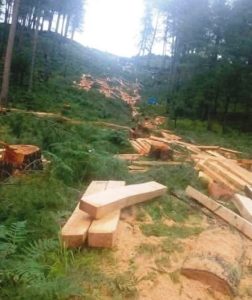
- Deforestation: The felling of old-growth deodar and kail trees for tower installation is a major flashpoint. The Bijli Mahadev Ropeway in Kullu has faced significant backlash due to reports of extensive tree felling and visible cracks on sacred slopes, raising fears of ecological damage.
- Geological Instability: Excavation and construction in seismic zones can destabilize slopes, increasing the risk of landslides, particularly during monsoons.
- Habitat Disruption: Fragmentation of wildlife habitats and disruption of migratory patterns are serious concerns.
- Local Resistance and Livelihood Fears:
- Cultural & Spiritual Sentiments: Projects near sacred sites often face opposition from local communities and religious groups who fear disrespect for their spiritual heritage. The alleged warnings from the local deity’s ‘oracle’ in the Bijli Mahadev case highlight this deep-seated concern.
- Economic Displacement: While bringing new jobs, ropeways can also displace traditional livelihoods, such as those of taxi drivers, porters, or mule owners, leading to local protests.
- The Political Labyrinth:
- Election Promises vs. Reality: Ropeways often feature prominently in election manifestos, but execution faces bureaucratic hurdles, funding challenges, and inter-party blame games. Projects initiated by one government might be stalled or deprioritized by the next.
- Regulatory Relaxation: Political pressure sometimes leads to attempts at relaxing environmental clearance norms. Reports suggesting exemptions from standard forest clearance safeguards for ropeways highlight a tension between developmental urgency and environmental protection.
- PPP Scrutiny: Large PPP projects attract scrutiny over transparency, land acquisition, and the equitable distribution of benefits, becoming fodder for political debate.
Conclusion: A Balancing Act on the Mountains
Ropeways undeniably represent a modern solution to Himachal Pradesh’s geographical challenges, promising enhanced connectivity and a tourism boom. However, their future success hinges on a delicate and politically charged balancing act. For these projects to truly uplift the state, it’s crucial to move beyond mere political promises and ensure transparent, environmentally sound planning, robust community engagement, and a genuine commitment to sustainable development that respects the unique ecological and cultural fabric of the Himalayas. Only then can Himachal’s ropeway revolution truly ascend to its full potential, without leaving irreversible scars on its pristine landscape.