
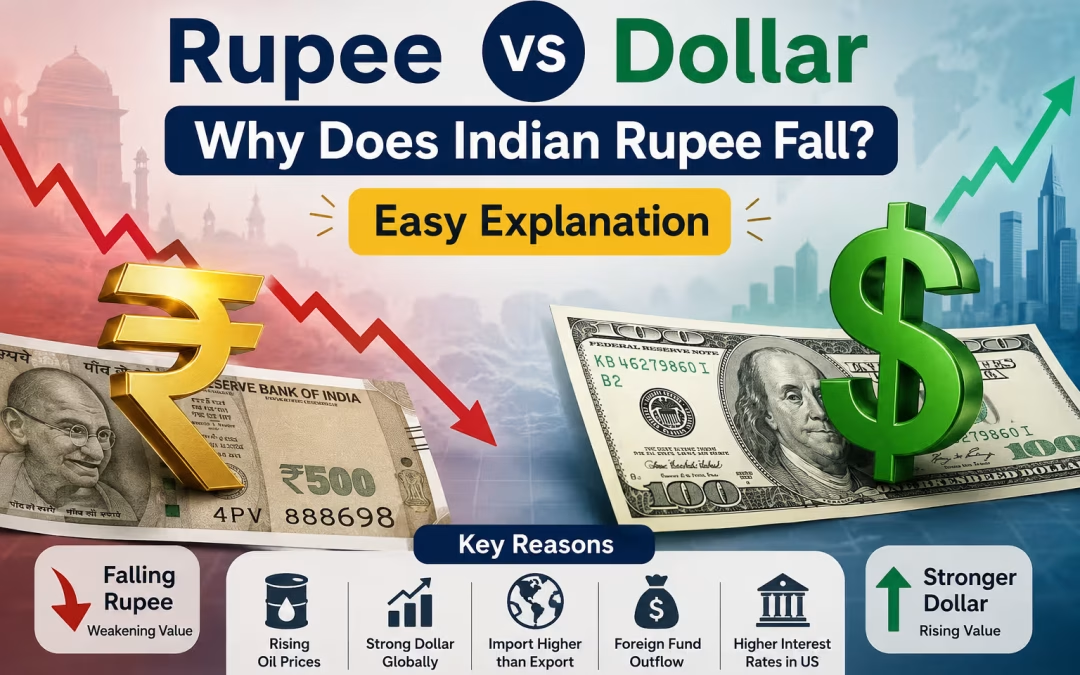
Easy Explanation – Even a Class 8 Student Can Understand!
Have you ever heard your parents say “petrol is expensive again” or “everything is getting costly”? Many times, this is connected to the Indian Rupee falling against the US Dollar. Let’s understand this step by step – in the simplest way possible.
💰 What is Exchange Rate?
Think of going to a shop to buy an American chocolate. The shopkeeper says it costs 1 Dollar. But you only have Indian Rupees. So you need to convert your money first.
Today, 1 US Dollar = around ₹95. This means you need to give ₹95 to buy something that costs 1 Dollar. This number is called the Exchange Rate.
Earlier → 1 Dollar = ₹83 | Now → 1 Dollar = ₹95. The Rupee has become weaker.
📉 How Much Has the Rupee Fallen?
In just 2 years, the Rupee lost nearly 14% of its value against the US Dollar.
To understand how big this is – imagine your pocket money was ₹83. Now the same things that used to cost ₹83 now cost ₹95. You are effectively ₹12 poorer. That is what Rupee depreciation feels like for the whole country.
🔍 Why Does the Rupee Fall? 4 Main Reasons
The Rupee falls when more people want Dollars and fewer people want Rupees. Here are the 4 biggest reasons:
🛢️ 1. India Buys a LOT of Oil
India imports over 85% of its oil and pays in Dollars. When oil prices rise, India needs more Dollars – and more Rupees are sold to get them. More Rupees in the market = Rupee gets cheaper.
🌍 2. Foreign Investors are Leaving
Big foreign companies invest in India by buying shares and bonds. When they feel uncertain, they pull money out. They sell Rupees and buy Dollars – which pushes the Rupee’s value down.
🇺🇸 3. The US Dollar is Very Strong
America’s interest rates are high right now. So global investors prefer to keep money in Dollars. When the whole world wants Dollars, the Dollar becomes powerful – and the Rupee becomes weaker.
📦 4. India Imports More Than It Exports
India buys more from the world (oil, electronics, gold) than it sells. This gap is called the Trade Deficit. We keep buying Dollars but don’t earn enough – so demand for Dollars stays high.
😟 What Happens When the Rupee Falls?
A falling Rupee is not just news – it affects your daily life. But it is not all bad!
❌ Bad Effects:
- Petrol and diesel become costly
- Imported phones, electronics, and medicines get expensive
- Studying or travelling abroad costs more for Indian families
- Inflation goes up – everyday food items also get costlier
✅ Good Effects:
- IT companies like TCS and Infosys earn in Dollars – they get more Rupees when they convert
- Exporters earn more Rupees for the same Dollar amount
- India’s foreign exchange earnings go up
🏦 What Does RBI Do to Protect the Rupee?
The Reserve Bank of India (RBI) keeps a huge reserve of US Dollars – around $640 to $700 billion. Think of it as India’s emergency Dollar savings.
When the Rupee falls too fast, RBI sells some of its Dollars in the market. This increases the supply of Dollars – which reduces their price and helps the Rupee stabilize.
🤔 Will the Rupee Reach ₹100 Per Dollar?
Many people are worried about this. But most financial experts say ₹100 per Dollar is unlikely in 2026.
Big banks like Bank of America expect the Rupee to actually recover to around ₹86–87. The ₹100 level would only happen if oil prices crossed $130 per barrel AND there were major global crises at the same time.
📝 Quick Recap – Remember for UPSC!
- Exchange Rate = How many Rupees you need to buy 1 Dollar. Higher the number, weaker the Rupee.
- Rupee falls when demand for Dollar is more than demand for Rupee in the global market.
- 4 main reasons: High oil imports, Foreign investors leaving, Strong US Dollar, Trade Deficit.
- Rupee fall = costly imports + higher inflation but good for IT companies and exporters.
- RBI uses Dollar reserves to prevent the Rupee from falling too fast.