
Interrelationship of Disaster and Development
GS-1, Unit-2, Sub Unit-1, HPAS Mains
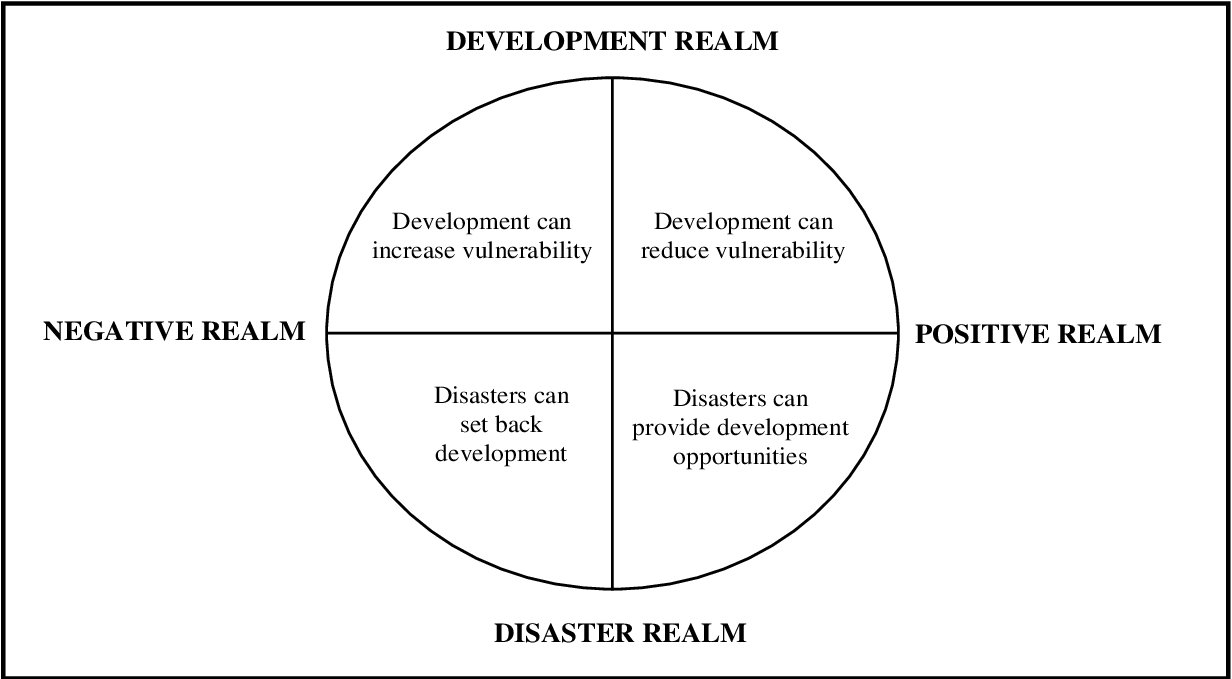
Development and disaster management are two sides of the same coin. While development aims to improve the quality of life, provide infrastructure, and boost economic growth, disasters—both natural and human-made—pose significant threats to these achievements. The relationship between development and disasters is complex and interdependent: development can either increase vulnerability to disasters or enhance resilience, depending on how it is planned and implemented. Understanding this fragile balance is crucial for building sustainable societies.
Understanding the Disaster-Development Nexus
Disasters are events that cause significant damage to life, property, and livelihoods. They can be sudden, like earthquakes and flash floods, or slow-onset, like droughts and soil degradation. Development, on the other hand, refers to economic growth, social progress, infrastructure expansion, and technological advancement. Ideally, development should reduce disaster risks, but in reality, poorly planned development often exacerbates vulnerabilities.
For example, rapid urbanization without proper planning can increase exposure to floods or landslides. Construction in ecologically sensitive areas, deforestation, and unregulated industrial expansion can intensify the impact of disasters. Conversely, proactive development—such as resilient infrastructure, early warning systems, and community preparedness—can reduce disaster impacts and foster recovery.
How Development Influences Disaster Risks
- Urbanization and Infrastructure: Unplanned urban growth often leads to overcrowded settlements in high-risk areas. Informal housing in flood-prone zones, weak drainage systems, and inadequate roads can transform natural hazards into disasters.
- Environmental Degradation: Deforestation, wetland destruction, and improper land use reduce natural buffers against hazards. Coastal development without mangrove protection increases vulnerability to cyclones and storm surges.
- Economic Activities: Industrial zones near rivers or fault lines may face heightened disaster risks. Heavy reliance on single economic sectors, like agriculture, increases vulnerability to climatic events like droughts or floods.
- Social Inequality: Marginalized communities often live in vulnerable locations with limited access to healthcare, insurance, and emergency services, making them disproportionately affected during disasters.
How Disasters Affect Development
Disasters can reverse decades of development gains in a matter of hours. They destroy infrastructure, disrupt education, halt economic activities, and strain public health systems. For instance, floods can wash away roads and bridges, making trade and transportation impossible. Earthquakes can devastate schools and hospitals, while cyclones can destroy agricultural lands, leading to food insecurity. Recovery demands huge financial resources, diverting funds from long-term development projects.
Beyond immediate losses, disasters can also have long-term socio-economic consequences. They can trigger migration, increase poverty, and worsen inequality. In this way, disasters not only affect the present but also undermine future development goals.
Building Resilience: The Key to Balancing Development and Disaster Management
To maintain the fragile balance between development and disaster management, societies must adopt strategies that integrate both aspects:
- Risk-Informed Planning: Development projects should consider hazard maps, vulnerability assessments, and environmental impact studies. Building codes, land-use regulations, and urban planning policies must prioritize safety and resilience.
- Community Engagement: Local communities are the first responders in disasters. Educating and involving them in preparedness, early warning systems, and resource management strengthens resilience.
- Investment in Infrastructure: Resilient infrastructure—like flood-resistant roads, earthquake-proof buildings, and storm shelters—reduces disaster impacts and ensures continuity of development.
- Environmental Conservation: Protecting forests, wetlands, and mangroves acts as a natural barrier against disasters while supporting sustainable development.
- Policy Integration: Disaster management should be mainstreamed into development policies rather than treated as a separate sector. Coordination among government agencies, NGOs, and private sectors is vital for effective planning and response.
Conclusion
The interplay between development and disaster management highlights the fragile balance societies must maintain. While development has the power to reduce vulnerability and enhance resilience, poorly planned growth can magnify disaster risks. Similarly, disasters can disrupt progress, creating setbacks that slow down economic and social advancement.
Sustainable development is only possible when it incorporates disaster risk reduction at every stage—planning, execution, and monitoring. By acknowledging this interrelationship, policymakers, communities, and stakeholders can ensure that growth is safe, inclusive, and resilient, turning potential disasters into opportunities for stronger, smarter development.
Note: Topic important for UPSC, HPAS, State PCS