
The Rise of National Consciousness: Press, Education, and the Indian Middle Class
GS-1, Unit-1, Sub Unit-1, HPAS Mains
The emergence of national consciousness in India was not merely a political development; it was a profound social transformation that unfolded over decades under colonial rule. While British policies primarily aimed at administrative convenience and economic exploitation, they unintentionally sowed the seeds of a new awakening. Three forces played a decisive role in this process: English education, the growth of the Indian middle class, and the vernacular and English press. Together, they created a shared identity, political awareness, and ultimately a collective national movement.
English Education: The Beginning of Modern Thought
British introduction of modern education—particularly after Macaulay’s 1835 Minute and Wood’s Despatch of 1854—transformed India’s intellectual landscape. While the intention was to create a class of “interpreters” loyal to the British, the outcome was starkly different.
Modern education exposed Indians to:
- Enlightenment values such as liberty, equality, and democracy
- Western political thought and constitutionalism
- Developments in science, rationality, and humanism
- Ideas of nationalism emerging in Europe
Educated Indians could now compare British rhetoric of justice with the reality of colonial exploitation. This created a new political awareness. Figures like Raja Ram Mohan Roy, Dadabhai Naoroji, M.G. Ranade, and Surendranath Banerjee were products of this new intellectual climate. English became a medium not just for administrative work but also for articulating demands, critiquing colonial policies, and connecting nationalist thinkers across regions.
Education also weakened rigid social structures. Though caste, gender barriers, and inequalities persisted, new spaces opened for debate and reform. Schools and colleges in Calcutta, Bombay, and Madras became breeding grounds for political discussion and anti-colonial ideas.
Birth and Growth of the Indian Middle Class
The new intelligentsia formed the core of what would soon become the Indian middle class—lawyers, teachers, journalists, clerks, doctors, and students. This group, though small in number, was highly influential due to its literacy, access, and administrative awareness.
This middle class played a crucial role in nationalism for several reasons:
- They understood colonial exploitation firsthand.
The educated classes could decode budgets, analyse administrative policies, and see the drain of wealth clearly. Naoroji’s Drain Theory is a classic example.
- They possessed communication skills.
Being familiar with English, they could represent Indian grievances in a language the British understood. Many early nationalists, including the founders of the Indian National Congress (1885), came from this class.
- They acted as intermediaries between rulers and the masses.
While initially limited by urban dominance and elitism, they helped translate nationalist ideas into vernacular languages, expanding the social base of nationalism.
- They formed professional associations.
Bodies such as the Poona Sarvajanik Sabha, the Bombay Presidency Association, and the Indian Association (1876) became early platforms for political discussion and agitation.
By the late 19th century, this middle class began to outgrow its earlier moderate outlook, giving birth to assertive nationalism, radical reformers, and revolutionary movements.
The Press: The Real Oxygen of Nationalism
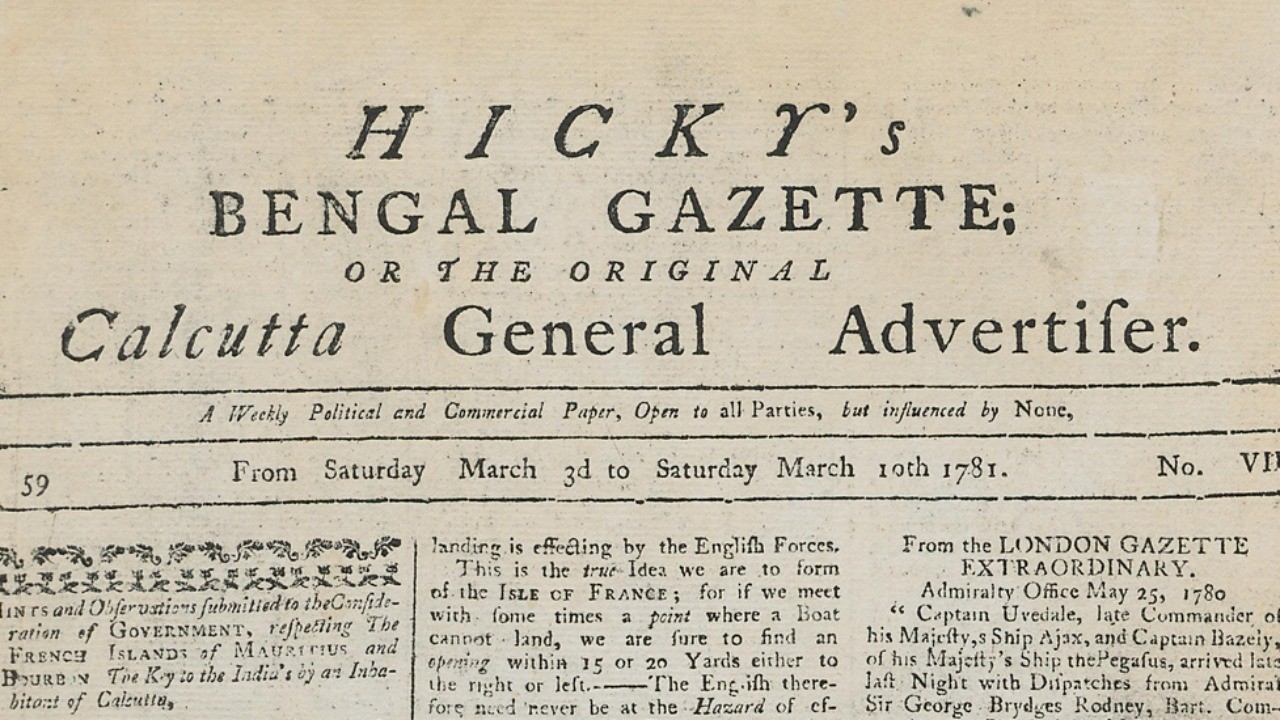
Perhaps the most powerful catalyst in the growth of national consciousness was the Indian press. By the 1870s, newspapers became the primary medium through which ideas circulated and political awareness spread. They reached far beyond the literate population, as educated Indians read them aloud in tea shops, markets, and public spaces.
Role of the Press in National Awakening
- Exposed colonial policies
Newspapers highlighted issues such as heavy taxation, forced cultivation, famines, economic drain, and racial discrimination. Periodicals like The Hindu, Kesari, Amrita Bazar Patrika, Bengalee, and Bombay Chronicle became pillars of public opinion. - Mobilized public sentiment
The Swadeshi Movement (1905–08) showcased the power of the press as it inspired boycotts, promoted indigenous industries, and sustained mass enthusiasm. - Provided a platform for debate
Public discussions on self-government, rights, and constitutional reforms The press acted as a forum where nationalist leaders shaped their arguments. - Resisted colonial censorship
Repressive measures such as the Vernacular Press Act (1878) were met with strong opposition. Newspapers boldly criticized the government, strengthening nationalist morale.
The press gave nationalism a voice, a vocabulary, and a nationwide audience.
Conclusion: A New India Awakens
By the early 20th century, India had undergone a crucial mental transformation. Education provided the intellectual base, the middle class gave leadership and organization, and the press created widespread political consciousness. These forces collectively turned scattered grievances into a unified national movement.
The rise of national consciousness in India was thus not an overnight event but a systematic evolution. It laid the groundwork for political mobilization, mass movements, and ultimately the struggle for freedom. More importantly, it made Indians aware of their collective strength—a psychological victory without which independence would have been impossible.