
Transport Infrastructure in India: Status, Progress, and Challenges
GS-1, Unit-2, Sub Unit-2, HPAS Mains
Transport infrastructure is the backbone of India’s economic growth, regional development, and connectivity. With a vast landmass and a large population, India requires a robust, integrated, and modern transport system. Over time, the country has expanded and upgraded its roads, railways, airways, and waterways, yet challenges remain. The following sections explain the status, progress, and issues shaping India’s transport landscape.
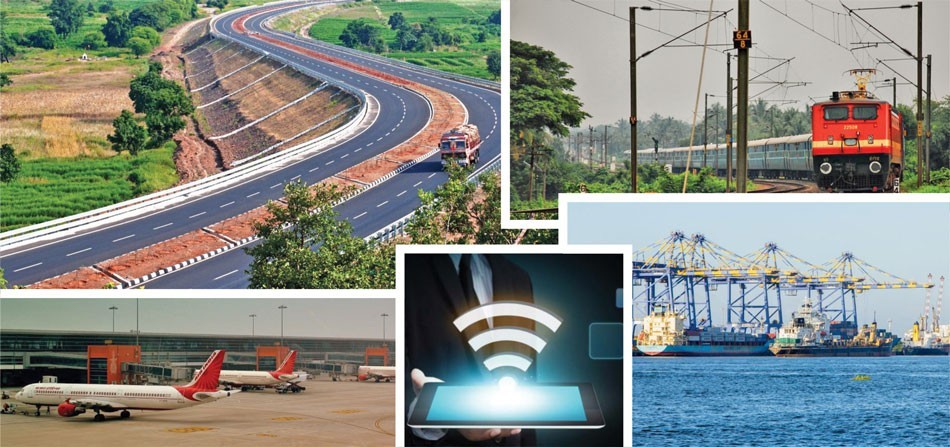
Current Status of Transport Infrastructure in India
India has one of the world’s largest and most diverse transport networks. Key features include:
Road Network
- Over 6.3 million km of roads (World’s 2nd largest)
- National Highways ~1.46 lakh km, carrying nearly 40% of total road traffic
- Serve as the backbone for passenger mobility and freight transport
Railways
- Route length of 68,000+ km (4th largest globally)
- Handles over 1.5 billion tonnes of freight annually
- Carries one of the world’s highest daily passenger volumes
- Critical for bulk transport and long-distance mobility
Aviation Sector
- 149 operational airports (as per Ministry of Civil Aviation)
- One of the fastest-growing aviation markets
- Rising domestic air travel and expanding international connectivity
- Increasing air cargo movement with new terminals and cargo hubs
Waterways & Coastal Transport
- 111 National Waterways (declared under National Waterways Act, 2016)
- Waterways offer cheapest freight transport cost per tonne-km
- Growing emphasis on coastal shipping and inland water transport
- Key waterways like NW-1, NW-2, and NW-3 under active development
Major Progress and Government Initiatives
India has made rapid advancement in modernizing transport systems. Significant developments include:
Road Transport Initiatives
- Bharatmala Pariyojana for upgrading highways and filling connectivity gaps
- Development of border roads, port connectivity corridors, and economic corridors
- Focus on reducing travel time, improving last-mile connectivity, and boosting logistics efficiency
Railway Modernization
- Introduction of modern trains like Vande Bharat Express
- 100% electrification of broad-gauge routes
- Construction of Dedicated Freight Corridors (DFCs) to reduce congestion
- Redevelopment of major stations with modern amenities
- Upgraded signalling, automatic train protection systems, and faster mobility infrastructure
Aviation Sector Growth
- Expansion under the UDAN scheme to improve regional connectivity
- Development of new airports in tier-2 and tier-3 cities
- Upgradation of existing airports to handle increasing passenger traffic
- Target to expand to 200+ operational airports in coming years
Waterways Development
- Operationalization of National Waterway-1 (Haldia–Varanasi)
- Development of multimodal terminals at Sahibganj, Haldia, and Varanasi
- Promotion of coastal shipping to reduce logistics cost
- Integrated infrastructure for Ro-Ro and Ro-Pax services
Integrated Planning
- PM Gati Shakti National Master Plan integrating 16 ministries
- Focus on multimodal connectivity and logistics parks
- Aims to lower logistics cost, reduce delays, and ensure faster project execution
Challenges in Transport Infrastructure
Despite progress, several issues hinder the efficiency of India’s transport system:
High Logistics Cost
- Estimated at 13–14% of GDP, higher than global benchmarks
- Reduces export competitiveness and raises the cost of goods
Last-mile Connectivity Issues
- Gaps in remote and rural areas
- Limits the full utilization of national infrastructure
Road Safety Concerns
- India records one of the highest road accident rates globally
- Need for better enforcement, road design improvements, and public awareness
Railway Bottlenecks
- Capacity saturation on high-density routes
- Need for modernization, higher speeds, and better freight–passenger balance
Aviation Sector Constraints
- High fuel costs and operational expenses
- Congestion at major airports
- Financial stress among small and medium airlines
Challenges in Waterways
- Need for regular dredging and adequate draft
- Lack of modern terminals and cargo-handling systems
- Limited awareness among logistics operators
Urban Transport Issues
- Severe traffic congestion in major cities
- Fragmented and insufficient public transport systems
- Rising pollution and growing dependence on private vehicles
Way Forward
To build a future-ready transport system, India must focus on:
- Strengthening multimodal connectivity through integrated logistics planning
- Investing in green mobility and expanding EV infrastructure
- Improving and integrating urban public transport systems
- Enhancing road safety enforcement and designing safer networks
- Upgrading railway, airport, and waterway infrastructure
- Encouraging technology-driven solutions like smart signalling, digital cargo tracking, and automated mobility systems
Conclusion
India’s transport infrastructure is undergoing a major transformation. With expanding networks, progressive government initiatives, and a strong push toward modernization, the country is moving toward an integrated and efficient transport ecosystem. However, challenges such as high logistics costs, safety issues, and infrastructure gaps must be addressed to sustain long-term growth. A resilient, inclusive, and future-ready transport system will be critical in India’s journey toward becoming a global economic leader.