
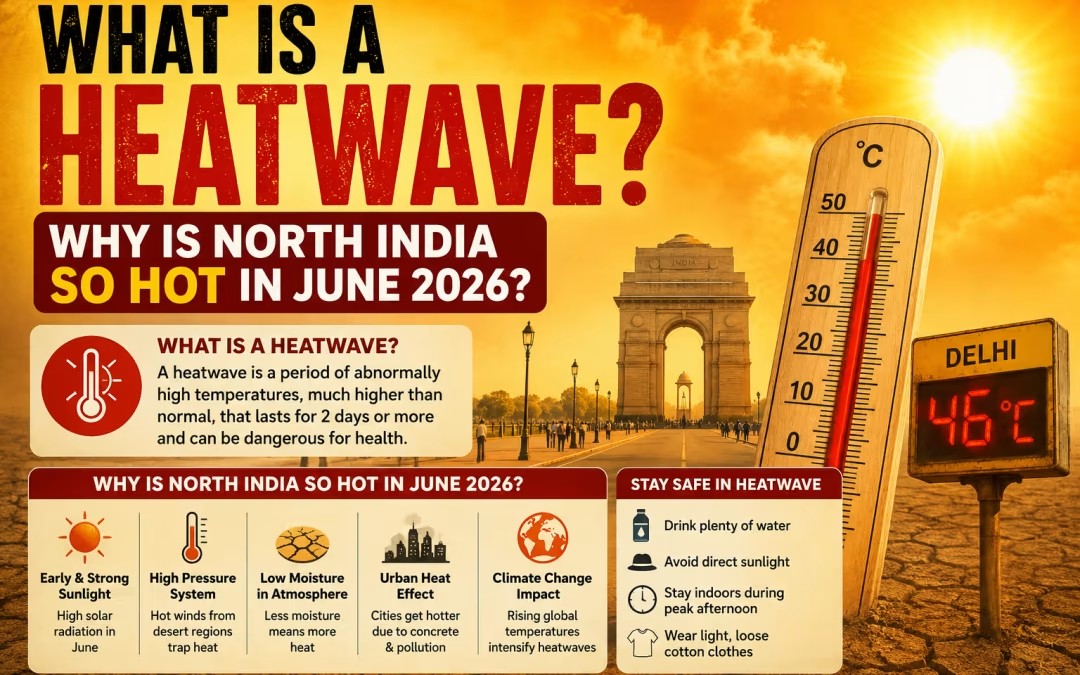
Easy Explanation – Even a Class 8 Student Can Understand!
Have you stepped outside in the afternoon lately and felt like the air itself is burning? You are not alone. North India in June 2026 is going through one of its worst heatwaves in recent years. But what exactly is a heatwave? Why does it happen? And why is 2026 so much hotter? Let us understand this step by step.
🌡️ What is a Heatwave?
A heatwave is not just “hot weather.” It is a special weather event where temperatures stay dangerously high for several days in a row.
Think of it like this – if your room is hot for one hour, that is normal. But if it stays extremely hot for 3 to 5 days without cooling down even at night, that is a heatwave.
🔥 How Hot is North India Right Now?
Temperatures in parts of Rajasthan crossed 48°C in May-June 2026 – one of the highest ever recorded. Sri Ganganagar in Rajasthan recorded 44.5°C as a single-day high.
Today, June 3, 2026, temperatures across Northwest and Central India are recording 4 to 8 degrees Celsius above normal levels. Delhi, Rajasthan, Punjab, Haryana, Uttar Pradesh, and Madhya Pradesh are the worst affected states.
Even the nights are not giving relief. Warm night conditions are continuing in northern plains, making it hard for the body to recover from daytime heat.
🔍 Why Does North India Get Heatwaves? 4 Main Reasons
☀️ 1. No Monsoon Yet in North India
The Southwest Monsoon brings rain and cooling to India every year. But it arrives in Kerala first (around June 1) and takes weeks to reach North India. Till then, North India keeps heating up with no relief from rainfall.
🌵 2. Dry Land Heats Up Very Fast
States like Rajasthan have dry, sandy land with very few trees. Dry soil absorbs heat quickly and radiates it back, making the air much hotter. Areas with below-normal pre-monsoon rainfall heat up even faster.
💨 3. Hot Winds Called “Loo”
North India experiences a hot, dry wind called “Loo” during summer. It blows from the west and northwest – from the hot deserts of Rajasthan and Pakistan. This wind pushes temperatures up sharply in the afternoon.
🌍 4. La Nina Effect and Climate Change
A global weather pattern called La Nina disrupted the monsoon formation this year and intensified pre-monsoon heat. On top of that, climate change is making every summer hotter than the last.
😰 What Happens During a Heatwave?
A heatwave is not just uncomfortable – it is dangerous. Here is how it affects people and the country:
❌ Harmful Effects:
- Dehydration, heat exhaustion, and heatstroke – can be life-threatening
- Children, elderly people, and outdoor workers are at the highest risk
- Crops can fail – wheat and vegetables get damaged by extreme heat
- Power demand shoots up due to heavy use of fans and ACs, causing power cuts
- Water sources dry up faster, causing shortage in rural areas
✅ What People Should Do:
- Stay indoors between 12 PM and 4 PM – the hottest part of the day
- Drink water every hour even if you do not feel thirsty
- Wear loose, light-coloured cotton clothes
- Do not leave children or elderly people alone inside closed vehicles
- Eat light food – avoid heavy meals during peak heat hours
🏛️ What is the Government Doing?
PM Modi has issued a nationwide heat advisory urging citizens to be careful. The government has set up cooling centres and shelters in cities for people who work outdoors.
The IMD is issuing colour-coded alerts – Yellow, Orange, and Red – to warn people about the level of danger. Delhi has been put under Yellow Alert with temperatures expected to touch 44°C to 45°C.
🟡 Yellow Alert – Be aware, moderate heat expected
🟠 Orange Alert – Be prepared, severe heat expected
🔴 Red Alert – Take action immediately, life-threatening heat
🌧️ When Will the Heat End?
The good news is that the Southwest Monsoon is expected to arrive in Kerala around June 4, 2026. It will slowly move towards North India over the next few weeks.
A Western Disturbance is also expected to bring temporary relief through rain and thunderstorms in Punjab, Haryana, and Delhi in the coming days. But experts warn this will be short-term relief – the heatwave could return until the monsoon fully arrives.
🌏 Is This Connected to Climate Change?
Yes. India’s summers have always been hot, but 2026 is shaping up to be one of the hottest ever. Scientists say climate change is making heatwaves more frequent, longer, and more dangerous every year.
As global temperatures rise, events like this will become the new normal – not just for India but for the whole world. This is why topics like climate change, disaster management, and heat action plans are so important for UPSC.
📝 Quick Recap – Remember for UPSC!
- Heatwave = Temperature 40°C or above AND at least 4.5°C above the normal for that area and date.
- North India is worst affected – states include Rajasthan, Delhi, UP, Haryana, Punjab, and MP.
- 4 main reasons – No monsoon yet, dry land, hot Loo winds, and La Nina plus Climate Change.
- Effects – health risks, crop damage, power cuts, water shortage.
- IMD issues Yellow, Orange, and Red alerts to warn people about heatwave severity.
- Monsoon arrival in Kerala (around June 4) will slowly bring relief to India over the next few weeks.