
Border Settlements After the First and Second World Wars: Causes, Consequences, and Conflicts
GS-1, Unit-1, Sub Unit-2, HPAS Mains
The First and Second World Wars not only devastated nations but also transformed the world map in unprecedented ways. The collapse of empires, rise of nationalism, emergence of new ideologies, and ambitions of victorious powers all contributed to redrawing borders across Europe, the Middle East, Asia, and Africa. The settlements that followed WWI and WWII shaped modern geopolitics, created new nations, and also ignited many conflicts that still continue today.
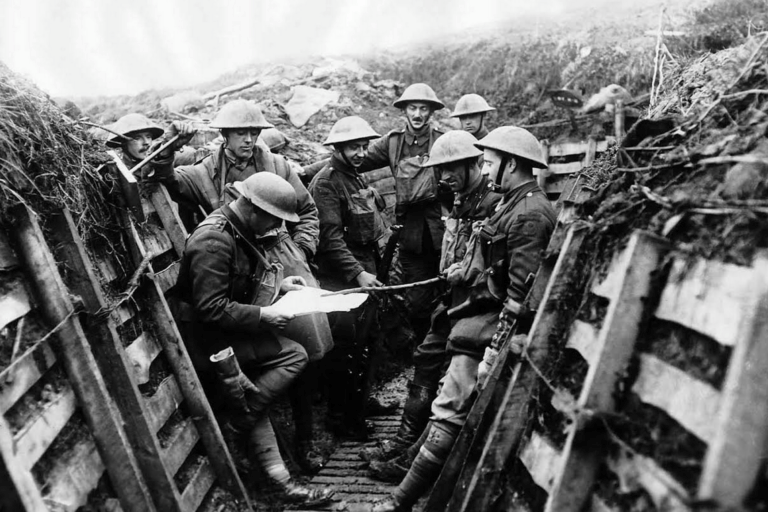
Causes Behind Border Settlements After World War I
Collapse of Major Empires
- Disintegration of the German Empire
- Breakup of the Austro-Hungarian Empire
- Fall of the Ottoman Empire
- Revolution and restructuring of the Russian Empire
Rise of Self-Determination
- Wilson’s Fourteen Points promoted the idea that ethnic groups deserved their own states.
- Applied unevenly, but influenced creation of:
- Poland
- Czechoslovakia
- Yugoslavia
Punitive Approach Toward Defeated Powers
- Harsh peace terms on Germany through the Treaty of Versailles
- Territorial loss for Austria and Hungary through Saint-Germain and Trianon
- Ottoman territories carved into mandates under Britain and France
- Goal was to weaken the defeated states, though it fuelled long-term resentment.
Major Border Settlements After WWI
Redrawing of Europe
- Germany lost:
- Alsace-Lorraine to France
- Territories to Poland (Polish Corridor, West Prussia)
- Colonies in Africa and Asia
- Austria-Hungary dissolved into:
- Austria
- Hungary
- Czechoslovakia
- Yugoslavia
- New independent states emerged from former Russian lands:
- Finland
- Estonia
- Latvia
- Lithuania
- Parts of Poland
Middle East Mandates
- Ottoman Empire’s Arab lands placed under European control:
- Iraq (British)
- Transjordan (British)
- Palestine (British)
- Syria (French)
- Lebanon (French)
- Borders often drawn without regard for ethnic or sectarian realities.
Creation of Multi-Ethnic States
- Czechoslovakia combined Czechs, Slovaks, Germans, and others.
- Yugoslavia brought together South Slavic groups with historical rivalries.
Consequences and Conflicts After WWI Settlements
German Resentment and Rise of Extremism
- Loss of territory and national humiliation enabled:
- Rise of Nazism
- Militarization and revisionist foreign policy
- Push for reclaiming lost lands
Ethnic Tensions in Eastern Europe
- Large minorities inside newly created states caused:
- Friction between national groups
- Demands for autonomy
- Future conflicts, especially in the Balkans
Instability in the Middle East
- Artificial borders contributed to:
- Sectarian conflicts
- Kurdish statelessness
- Long-term disputes like the Israel–Palestine conflict
Causes Behind Border Settlements After World War II
Emergence of Superpowers
- U.S. and USSR dominated decision-making.
- Border settlements aimed at:
- Creating spheres of influence
- Preventing another global conflict
Security-Driven Punishment
- Germany, Italy, and Japan faced:
- Territorial losses
- Occupation by Allied powers
- Demilitarization
- But reconstruction (e.g., Marshall Plan) prevented a repeat of Versailles-style resentment.
Acceleration of Decolonization
- Weakening of European powers led to independence of:
- India and Pakistan
- Israel
- Arab states
- African nations
- New borders emerged as colonial empires ended.
Major Border Settlements After WWII
Division of Germany and Berlin
- Four occupation zones controlled by:
- U.S.
- USSR
- Britain
- France
- Emergence of:
- West Germany (FRG)
- East Germany (GDR)
- Berlin also divided, symbolizing the Cold War divide.
Shift of Polish Borders Westward
- Poland lost eastern territory to USSR.
- Gained former German regions like:
- Silesia
- Pomerania
- Parts of East Prussia
Soviet Territorial Expansion
- USSR absorbed:
- Baltic states
- Parts of Finland
- Territories from Romania
- Eastern Poland
- Influence extended over Eastern Europe through satellite states.
Asia’s Postwar Reordering
- Korea divided at the 38th parallel
- Japan lost:
- Korea
- Taiwan
- Southern Sakhalin
- Pacific islands
- Rise of new states as Japan retreated from Southeast Asia.
Impact on Middle East and Africa
- British and French influence declined, leading to:
- Independence movements
- Creation of new borders
- Emerging regional rivalries
Consequences and Conflicts After WWII Settlements
Cold War Divisions
- Formation of:
- Eastern Bloc (Soviet-led)
- Western Bloc (U.S.-led)
- Berlin Wall, NATO, and Warsaw Pact shaped world politics.
New Conflicts in Asia
- Korean War from unresolved division.
- End of Chinese Civil War resulted in:
- People’s Republic of China
- Taiwan (ROC) on separate paths.
Postcolonial Border Conflicts
- Rapid decolonization created:
- India–Pakistan Partition and the Kashmir conflict
- African border disputes
- Arab–Israeli wars after creation of Israel
Conclusion
The border settlements after World War I and World War II reshaped continents and laid the foundations for modern international politics. The punitive and unstable arrangements after WWI created resentment and triggered WWII, while the more strategic settlements after WWII produced the Cold War and numerous postcolonial challenges. Even today, conflicts in Europe, the Middle East, Asia, and Africa can be traced back to the maps drawn between 1919 and 1945. These settlements show how deeply borders influence political stability, identity, and global power dynamics — long after wars themselves have ended.