
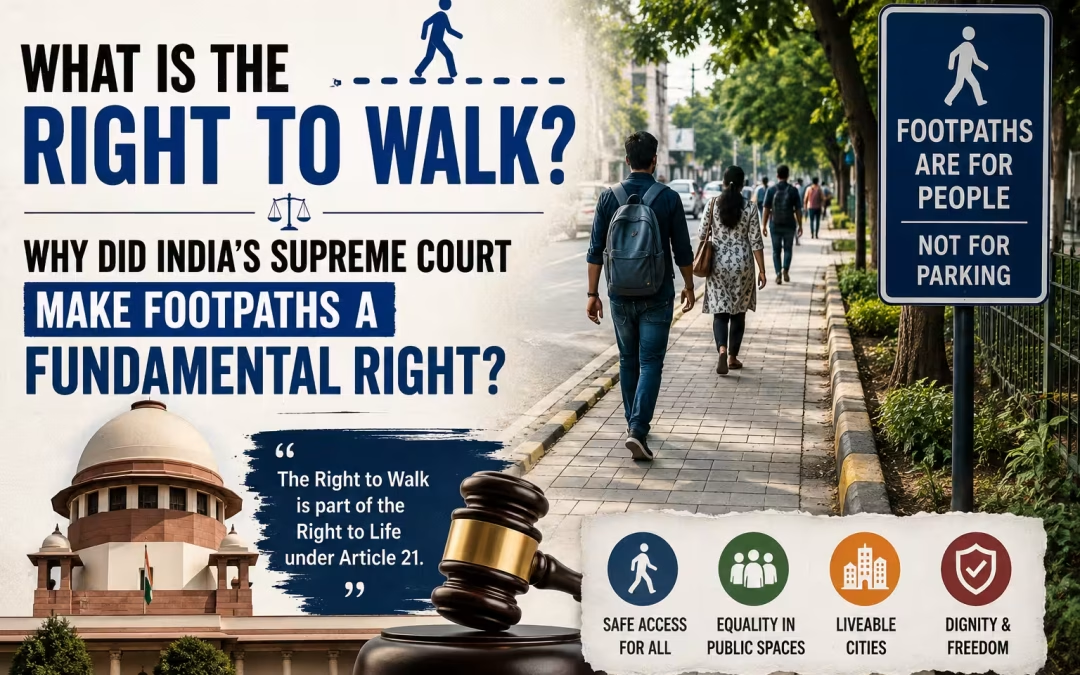
Have you ever tried to walk on a footpath and found it blocked by a parked car, a shop, or a pile of garbage? Or maybe there was no footpath at all and you had to walk on the road risking your life? This is the reality for millions of Indians every single day. And now, India’s Supreme Court has said – this is not just a problem, it is a violation of your Fundamental Rights. Let us understand what happened and why it matters.
😢 The Story That Started It All
This landmark judgment did not begin in a big court fight between politicians. It started with a tragedy that happens every day in India.
A father was walking his 5-year-old son to school one morning. There was no footpath on the road. So they walked on the edge of the road itself. Suddenly, a water tanker hit the little boy. The child died on the spot.
The father went to court asking for compensation. But the Supreme Court looked beyond just money. It asked a bigger question – why was there no footpath in the first place? And why are millions of Indians forced to risk their lives just to walk on a road?
⚖️ What Did the Supreme Court Decide?
On June 19, 2026, the Supreme Court of India made a historic ruling. It declared that the Right to Walk safely on footpaths is a Fundamental Right of every Indian citizen.
The court said that walking is the most basic form of movement for human beings. If a person cannot even walk safely on a road, then their right to life and freedom means nothing.
The Supreme Court held that the right to walk safely on demarcated footpaths is a Fundamental Right protected under Article 19(1)(d) and Article 21 of the Indian Constitution.
The court also did not stop at just giving compensation to the family. It converted the case into an ongoing suo motu case titled “Re: Fundamental Right to Walk and Footpath” – meaning the court will keep monitoring this issue on its own going forward.
📖 Which Articles Protect This Right? Know for UPSC
Article 19(1)(d) – Right to Move Freely
This article gives every citizen the right to move freely throughout India. The court said that walking on a safe footpath is a direct part of this right. If there is no safe footpath, this right is being violated.
Article 21 – Right to Life and Personal Liberty
This is India’s most important Fundamental Right. The Supreme Court has expanded it over the years to include the right to live with dignity. The court said that forcing a person to walk on a dangerous road without a footpath violates their right to life and dignity.
🚶 Why Is This Such a Big Problem in India?
This ruling came because the situation on Indian roads is really dangerous for people who walk. Here are some shocking facts:
Pedestrian deaths in India more than doubled in just one decade – from 13,894 deaths in 2014 to over 28,000 deaths per year recently. India is one of the most dangerous countries in the world for pedestrians.
- Most Indian cities have footpaths that are broken, encroached, or simply missing
- Vehicles, shops, and vendors regularly block footpaths – forcing walkers onto roads
- Low-income people, students, elderly, and differently-abled people are the worst affected
- India designs its roads for cars – not for people who walk
- Even in new roads built under Smart Cities Mission, footpaths are often an afterthought
📋 What Has the Supreme Court Directed?
The court did not just declare the right – it also gave clear orders to the government and local bodies. Here is what it said:
For the Central Government:
The Ministries of Housing and Urban Affairs, Rural Development, and Road Transport were made parties to the case. The government must create a national law that protects pedestrian rights and makes footpaths mandatory on all roads.
For Municipal Bodies and Civic Authorities:
Wherever a public road is built or maintained, providing a safe and clearly marked footpath is now an absolute legal duty. There are no excuses. Citizens can now take legal action against municipal bodies that fail to provide safe footpaths.
For Andhra Pradesh (First State to Act):
After this ruling, Andhra Pradesh became the first state in India to create a dedicated Pedestrian Safety and Universal Accessibility Policy in 2026. This policy includes road safety audits, fixing footpath infrastructure, and strict action if design failures cause pedestrian deaths.
🏛️ What is a Suo Motu Case? Know This for Polity
Usually a court only acts when someone files a case. But in a Suo Motu case, the court takes up an issue on its own without waiting for anyone to file a petition.
The Supreme Court converted this case into a suo motu proceeding. This means the court will keep following up on its own to make sure footpaths are actually built across India. It is a way for the court to ensure its orders are actually followed on the ground.
💡 Why Does This Matter for UPSC?
This ruling is important for multiple GS Papers. Here is why:
GS Paper 2 – Polity and Governance:
It expands the scope of Article 21 again – something the Supreme Court has been doing for decades. It also connects Fundamental Rights to local governance and municipal bodies which are covered under the 74th Constitutional Amendment.
GS Paper 3 – Infrastructure and Urban Planning:
It raises questions about how Indian cities are planned. Roads are built for vehicles. People who walk – especially the poor – are completely ignored in urban design.
GS Paper 4 – Ethics:
This case is a perfect example of how the judiciary can stand up for the voiceless and vulnerable in society – those who cannot afford vehicles and must walk every day.
📝 Quick Recap – Remember for UPSC!
- Case: Maniyar Iliyaz v. P. Ayyappan – decided June 19, 2026 by the Supreme Court of India.
- Ruling: Right to walk safely on footpaths is a Fundamental Right under Article 19(1)(d) and Article 21.
- A 5-year-old boy’s death on a road with no footpath triggered this historic judgment.
- The case was converted into a Suo Motu proceeding titled “Re: Fundamental Right to Walk and Footpath”.
- Civic bodies and municipal corporations now have an absolute legal duty to provide safe footpaths on all roads.
- Andhra Pradesh became the first state to form a dedicated Pedestrian Safety Policy after this ruling.
- Pedestrian deaths in India more than doubled in a decade – making this ruling urgent and necessary.